mozgi
Seedance 2.0
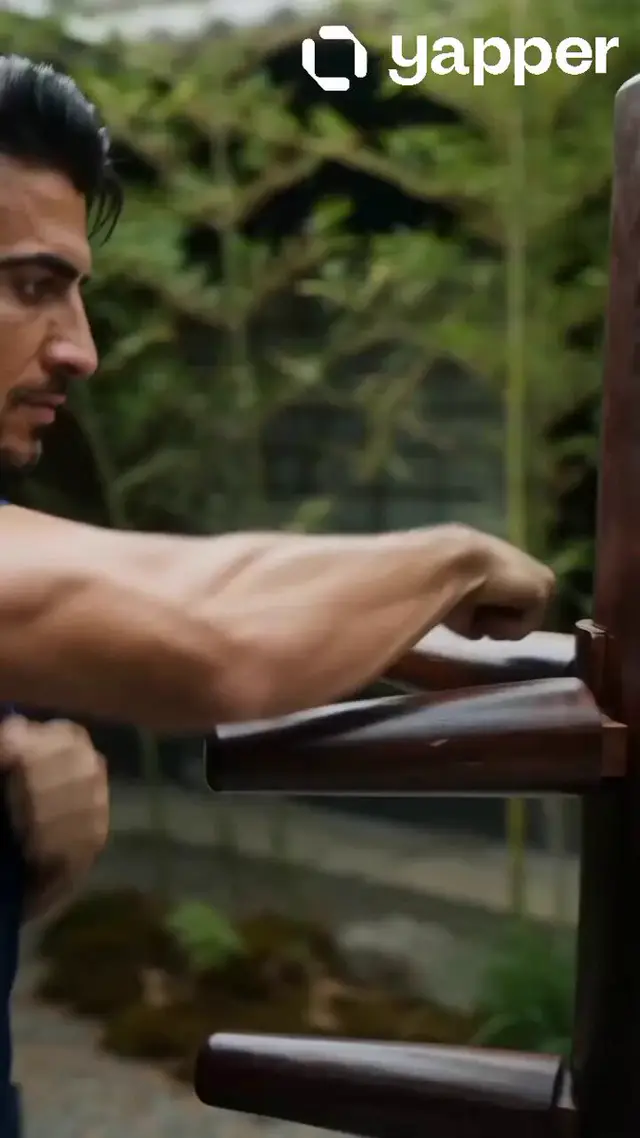
A Wing Chun practitioner speeds up and slows down strikes on a wooden dummy in an old training hall, then breaks it — video
Prompt
PROMPT:
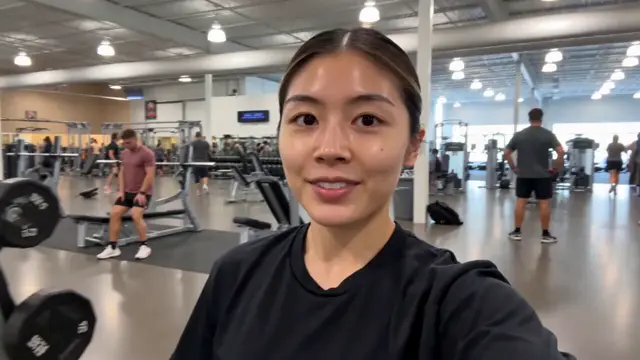
【Style】Photorealistic Wing Chun Film, high-energy Douyin action video, fast-to-slow rhythm changes (Ramp-mo), high-speed photography (High-Speed Photography), 4K cinematic image quality, realistic skin, sweat, and wood grain textures; no anime look, no magical effects 【Duration】20 seconds 【Aspect Ratio】9:16 vertical 【Scene】A traditional old Lingnan martial arts school, with dark wooden floors, mottled gray walls, and wooden lattice windows; early morning sunlight shines in from the side, with fine dust floating in the air. A traditional solid-wood muk yan jong is fixed in the center of the frame, with a cylindrical body, three wooden arms, and one angled wooden leg 【Character】Wing Chun practitioner @Image 1; strictly match the face shape, facial features, hairstyle, body proportions, and original clothing in the reference image. Maintain the same person and the same appearance throughout 【Audio】No dialogue, no subtitles; emphasize the sounds of impacts against the wooden dummy, feet scraping against the floor, short breaths, and wood cracking at the end

[00:00-00:04] Shot 1: Opening with rapid strikes against the wooden dummy (Impact Hook)
Start on fast action in the very first frame, with no introductory scene-setting.
Close side shot: the protagonist is rapidly practicing on the wooden dummy, continuously performing tan sao, bong sao, pak sao, palm strikes, and short straight punches along the body’s centerline; the hands rapidly alternate between the three wooden arms, making them vibrate repeatedly from the impacts.
The camera closely tracks the protagonist’s hands as it moves horizontally (Close Tracking). Fists and palms whip past the lens at high speed with natural motion blur; each strike produces a different wooden sound: “tak, slap, thud, tak-tak-slap”.
Cut to a low-angle full-body shot: the protagonist uses compact steps to move around the wooden dummy’s angled wooden leg, keeping the upper body stable throughout; the feet do not cross, and there are no large jumps.
The final palm strike lands heavily in the center of the dummy. The entire wooden dummy jolts violently, shaking dust off its surface, but no cracks appear.

[00:04-00:08] Shot 2: Sudden slowdown · Precise slow practice (Ramp Down)
After the final strike, all sound suddenly falls silent, and the footage shifts from fast action into slow motion (Ramp Down).
Medium shot from a front-side angle: the protagonist slows down, keeping the left hand against the upper wooden arm and gently redirecting it outward; the right hand drives a short straight punch toward the center of the wooden dummy, then quickly retracts after the fist makes contact.
The protagonist continues slowly through bong sao, pak sao, and palm strikes, clearly separating each movement. The arm movements are short and close to the body, with the elbows not flaring out excessively.
The camera slowly moves about 90 degrees around the protagonist and the wooden dummy (Slow Orbit), showing the palm brushing against the rough wood grain, the wooden arms vibrating slightly, and beads of sweat running down the protagonist’s cheek.
The protagonist keeps their gaze fixed on the center of the dummy, with relaxed shoulders and lips gently closed, breathing evenly; they are not angrily flailing but carefully gauging distance and rhythm.

[00:08-00:12] Shot 3: From slow to fast · Continuous acceleration (Progressive Acceleration)
Low drum beats gradually come in as the protagonist begins increasing the practice speed in stages.
First combination at a moderate speed: the left hand redirects the wooden arm, and the right palm strikes toward the center of the dummy.
The second combination speeds up noticeably: bong sao into pak sao, immediately followed by two short straight punches.
The third combination reaches maximum speed: the left and right hands rapidly alternate, slapping the wooden arms aside as fists and palms dart along the centerline, combined with small turns and low, close-to-the-ground footwork to move around to the side of the wooden dummy.
The camera performs a low-angle, close-range orbit (Low-angle Steadicam Orbit), moving from behind the protagonist to a front-side angle. Wooden arms sweep rapidly through the foreground, while the wooden lattice windows and sunlight in the background create slight speed trails.
The protagonist moves faster and faster but does not sway erratically from side to side. Their face remains composed; only their breathing grows heavier and their gaze more focused.
The wooden dummy vibrates continuously with dense wooden clacks, but remains intact; it must not crack prematurely.

[00:12-00:14] Shot 4: Sudden stop · Locking onto the dummy (Sudden Silence)
After completing the final rapid combination, the protagonist suddenly stops both hands.
All drum beats, impact sounds, and camera movement stop at the same time.
Static front medium shot: the protagonist stands in front of the wooden dummy without moving their feet, draws the left hand back to the chest, and lets the right hand hang naturally at their side.
The wooden dummy still wobbles slightly, and a few wood chips fall from its body to the floor.
Cut to a close-up of the face: the protagonist slowly raises their eyes and fixes their gaze on the center of the wooden dummy; their lips tighten slightly as they take a deep breath.
Hold the silence, leaving a clear pause before the final one-inch punch.

[00:14-00:17] Shot 5: Open palm approaches · Fist clenches and gathers power (Open Palm to Fist)
Side medium close-up: the protagonist slowly raises the right hand, fingers fully spread, palm facing the center of the wooden dummy.
Clearly show a fully open hand first; it must not start as a fist.
The protagonist keeps their body steady and moves the right hand toward the wooden dummy very slowly. The camera gently pushes forward with the palm as it inches closer.
Cut to an extreme close-up (Extreme Close-up): the open palm stops about one inch from the wooden dummy without touching it. All five fingers remain naturally extended, with the palm, knuckles, and rough wood grain all clearly visible.
After a brief pause, the protagonist begins to gather power by clenching the fist: the little finger slowly curls in first; the ring and middle fingers bend in sequence; the index finger tightens next; the thumb presses over the knuckles last.
The five fingers gradually tighten, transforming fully from an open palm into a vertical fist.
During the fist-clenching motion, the arm must not pull back, and the fist must remain extremely close to the wooden dummy.
The moment the protagonist clenches the fist, the forearm muscles and tendons on the back of the hand tense slightly, while the shoulders remain lowered and the body does not lunge forward.
The only sounds are the faint skin friction as the fingers clench and the protagonist’s slow inhale.

[00:17-00:20] Shot 6: One-inch punch · Wooden dummy shatters (One-Inch Punch)
Extreme close-up from the side: the protagonist’s already clenched right fist is held about one inch in front of the center of the wooden dummy.
Hold still for about 0.3 seconds.
The protagonist suddenly exhales sharply, and the clenched fist shoots forward from extremely close range. The fist does not pull back or swing widely; it moves forward only a few centimeters, cleanly striking the center of the dummy.
The fist impact must be a very short, very fast, concentrated burst of movement: the open palm has already moved close to the dummy; the fingers gradually curl into a fist; the fist gathers power in place; only then does it suddenly strike from a distance of one inch.
Do not merge these four stages into an ordinary straight punch.
A single, heavy, sharp “thump” sounds at the moment of impact.
The wooden dummy first vibrates violently as a whole, then radial cracks appear at the point of impact. The thick body splits apart from the center into several pieces; the three wooden arms and the wooden leg below fall away with the splitting body. Real wood chips fly forward and to both sides.
Switch to high-speed photography at the moment it shatters (Super Slow-mo): morning light illuminates wood chips spinning through the air and heavy chunks of wood, which fall onto the wooden floor with realistic weight, making a series of “crack, thud, thud” impacts.
No flames, no smoke, no energy waves; the wooden dummy must not explode like glass. The break must look like real, heavy wood splitting.
After completing the one-inch punch, the protagonist’s right fist stops at the original center of the wooden dummy. Their body remains steady, without stumbling forward or recoiling from the impact.
Return to normal speed for the final 0.6 seconds: the protagonist slowly withdraws the right fist, returns to the asking-hand guard, and calmly looks at the pieces of wood scattered at their feet.
The camera slowly pulls back (Slow Pull-back), ending on a freeze-frame of the protagonist, the shattered wooden dummy, pieces of wood covering the floor, and dust floating in the morning light.

【Mandatory One-Inch Punch Requirements】
The final action must be strictly divided into five clear stages: 1. The protagonist first fully opens the right hand; 2. The open palm slowly approaches the wooden dummy; 3. The palm stops about one inch from the dummy; 4. The five fingers curl in sequence, slowly forming a fist, which briefly gathers power; 5. Only then does the clenched fist suddenly strike from extremely close range.
The audience must clearly see the entire process of “the open palm approaching” and “the fist clenching and gathering power”.
Do not start with a fist;
Do not pull the hand back after making a fist;
Do not skip the gradual clenching of the hand;
Do not turn the one-inch punch into an ordinary long-range straight punch;
Do not let the fist hit the wooden dummy before it is fully clenched;
The final impact must happen only after the fist is fully clenched and held briefly.

【Director’s Constraints】
Generate only one protagonist. The protagonist’s face, hairstyle, body, and clothing must strictly match @Image 1 throughout.
The wooden dummy must always have three wooden arms and one wooden leg. Do not change its structure or add wooden arms.
The wooden dummy must remain intact before 17 seconds, with only vibrations and a small amount of dust falling off.
No ordinary boxing crosses, hooks, large wind-ups, flying kicks, rolls, or acrobatic moves.
Do not let the palm pass through the wooden arms or the fist penetrate the body of the dummy.
No extra fingers, missing fingers, fused fingers, deformed palms, or skipped frames during the fist-clenching motion.
No magical light effects, glowing fists, shock waves, flames, smoke, or comic-book speed lines.
Do not make the wood look like glass, foam, or rubber.
Do not have the protagonist roar, grit their teeth, or celebrate after breaking the wooden dummy.
No other people, dialogue, subtitles, titles, logos, watermarks, or garbled text.
【风格】真人写实咏春功夫短片(Photorealistic Wing Chun Film),抖音高燃动作视频,快慢节奏切换(Ramp-mo),高速摄影(High-Speed Photography),4K电影画质,真实皮肤、汗水与木材纹理,无动漫感、无魔法特效 【时长】20秒 【比例】9:16竖屏 【场景】传统岭南老武馆,深色木地板、斑驳灰墙、木格窗;清晨阳光从侧面照进来,空气中漂浮细微尘埃。画面中央固定着一座传统实木木人桩,圆柱形桩身、三根木臂、一根斜伸木腿 【角色】咏春练习者@ 图片1,人物脸型、五官、发型、身材比例和原本服装严格参考图片,全程保持同一人物、同一造型 【声音】无对白、无字幕;突出木桩碰撞声、脚步摩擦声、短促呼吸声与结尾木材碎裂声 [00:00-00:04] 镜头1:开场高速击桩(Impact Hook) 开场第一帧直接进入高速动作,不进行环境铺垫。 近距离侧拍:主角正在快速练习木人桩,双手围绕身体中线连续完成摊手、膀手、拍手、掌击和短促冲拳;拳掌在三根木臂之间快速切换,木臂被撞得连续震动。 镜头紧贴主角双手横向移动(Close Tracking),拳掌高速掠过镜头,带有自然运动模糊;每一次击打都产生不同的木质声音:“嗒、啪、咚、嗒嗒啪”。 切低机位全身镜头:主角脚下以紧凑的小步绕过木人桩的斜伸木腿,上半身始终保持稳定,双脚不交叉,不使用大幅度跳跃。 最后一记掌击重重落在木桩中央,木人桩整体猛震一下,桩身表面的灰尘被震落,但不能出现裂缝。 [00:04-00:08] 镜头2:突然减速·精准慢练(Ramp Down) 最后一记击打结束后,所有声音突然安静,画面从高速动作切入慢动作(Ramp Down)。 侧前方中景:主角放慢速度,左手贴住上方木臂,缓慢向外化开;右手沿着木人桩中央送出一记短促直拳,拳面接触木桩后迅速收回。 主角继续缓慢完成膀手、拍手和掌击,每一个动作都清晰分开,手臂动作短小、贴身,双肘不过度张开。 镜头围绕主角与木人桩缓慢移动约90度(Slow Orbit),展示手掌擦过粗糙木纹、木臂轻微震动、汗珠沿着主角脸颊滑落。 主角目光始终锁定木桩中央,肩膀放松、嘴唇微闭,呼吸平稳;不是生气乱打,而是在观察距离和节奏。 [00:08-00:12] 镜头3:由慢到快·连续加速(Progressive Acceleration) 低沉鼓点逐渐进入,主角练习速度开始一层层提高。 第一组动作速度适中:左手化开木臂,右掌击向木桩中央。 第二组明显加快:膀手接拍手,紧接两记短促冲拳。 第三组达到最高速度:左右手连续交替拍开木臂,拳掌沿着中线快速穿梭,配合小幅转身和贴地步法绕到木人桩侧面。 镜头采用低角度贴身环绕(Low-angle Steadicam Orbit),从主角背后绕至侧前方;前景木臂快速掠过,背景木格窗 and 阳光形成轻微速度拖影。 主角动作越打越快,但身体不左右乱晃,脸部仍然沉稳,只有呼吸逐渐加重、目光越来越集中。 木人桩不断震动并发出密集木响,此时仍然保持完整,不能提前破裂。 [00:12-00:14] 镜头4:突然停手·锁定木桩(Sudden Silence) 主角完成最后一组高速连击后,双手突然停住。 所有鼓点、击打声和镜头运动同时停止。 固定正面中景:主角站在木人桩前,双脚不移动,左手收回胸前,右手自然垂在身体一侧。 木人桩仍在轻微晃动,几粒木屑从桩身落到地板上。 切面部近景:主角缓慢抬起眼睛,目光锁定木人桩中央位置;嘴唇微微收紧,深吸一口气。 画面保持安静,为最后的寸拳动作留出明显停顿。 [00:14-00:17] 镜头5:摊掌靠近·握拳蓄力(Open Palm to Fist) 侧面中近景:主角缓慢抬起右手,五指完全摊开,手掌正对木人桩中央。 必须先清楚展示一只完全张开的手掌,不能一开始就是拳头。 主角保持身体稳定,右手以非常缓慢的速度向木人桩靠近;手掌每接近一点,镜头就跟随手掌轻轻向前推进。 切极近特写(Extreme Close-up):张开的手掌停在距离木人桩约一寸的位置,手掌没有接触木桩,五根手指保持自然伸展,掌心、指节和粗糙木纹同时清晰可见。 短暂停顿后,主角开始蓄力握拳:小指首先缓慢收拢;无名指和中指依次弯曲;食指随后收紧;拇指最后压住拳面。 五根手指逐渐收紧,完整地从摊掌变成竖直拳头。 握拳过程中,手臂不能后拉,拳头与木桩的距离始终保持极近。 主角握紧拳头的一瞬间,前臂肌肉与手背筋络轻微绷紧,肩膀仍然下沉,身体不前扑。 声音只保留手指握紧产生的细微皮肤摩擦声和主角缓慢吸气声。 [00:17-00:20] 镜头6:寸拳冲击·木桩碎裂(One-Inch Punch) 极近侧面特写:主角已经握紧的右拳停在木人桩中央前方约一寸距离。 静止约0.3秒。 主角突然短促呼气,握紧的拳头从极近距离瞬间向前冲击;拳头不向后拉、不大幅挥动,只向前移动几厘米,干净击中木桩中央。 拳头冲击必须是一个极短、极快、集中爆发的动作:摊开的手掌已经靠近木桩;手指逐渐握成拳头;拳头原地蓄力;最后才从一寸距离突然冲击。 不能把这四个阶段合并成普通直拳。 接触瞬间响起一声厚重短促的“砰”。 木人桩先整体猛烈震动,拳头落点随即出现放射状裂纹;厚重桩身从中央崩裂成数块,三根木臂和下方木腿随着裂开的桩身脱落,真实木屑向前方和左右两侧飞散。 碎裂瞬间进入高速摄影(Super Slow-mo):晨光照亮空中翻转的木屑和厚重木块,木块带着真实重量落向木地板,连续发出“咔嚓、咚、咚”的撞击声。 没有火焰、没有烟雾、没有能量波;木桩不能像玻璃一样爆炸,必须呈现真实厚重的木材断裂。 主角完成寸拳后,右拳停在原来的木桩中心位置,身体保持稳定,没有向前跌倒,也没有被反作用力弹开。 最后0.6秒恢复正常速度:主角缓慢收回右拳,重新摆出问手姿势,平静注视散落在脚下的木块。 镜头缓慢向后拉远(Slow Pull-back),定格在主角、碎裂木人桩、满地木块和晨光尘埃组成的画面。 【寸拳动作硬性要求】 结尾动作必须严格分成五个清楚阶段:1. 主角先完全摊开右手手掌; 2. 张开的手掌缓慢靠近木人桩; 3. 手掌停在距离木桩约一寸的位置; 4. 五根手指依次收拢,慢慢握成拳头并短暂蓄力; 5. 握紧的拳头才从极近距离突然冲击。 必须让观众清楚看见“摊掌靠近”和“握拳蓄力”的全过程。 不能一开始就是拳头; 不能握拳以后再次向后拉手; 不能省略手掌逐渐握紧的过程; 不能把寸拳生成成普通长距离直拳; 不能让拳头在握紧时提前击中木桩; 必须在完全握拳并短暂停顿后,才发生最后冲击。 【导演约束】 只生成一名主角,人物全程严格保持@图片1的脸、发型、身材和服装。 木人桩始终保持三根木臂、一根木腿,不能改变结构或增加木臂。 木人桩在17秒之前保持完整,只能震动和掉落少量灰尘。 不要普通拳击摆拳、勾拳、大幅蓄力、飞踢、翻滚或杂技动作。 不要让手掌穿过木臂,不要让拳头穿透桩身。 不要多余手指、缺少手指、手指粘连、手掌变形、握拳过程跳帧。 不要魔法光效、发光拳头、冲击波、火焰、烟雾或漫画速度线。 不要让木头出现玻璃、泡沫或橡胶质感。 不要人物怒吼、咬牙切齿或击碎木桩后庆祝。 不要其他人物、对白、字幕、标题、Logo、水印或乱码文字。
- Needs your photo: attach an image to the request — the prompt works with it.
The rights to this prompt belong to its author @johnAGI168. You are responsible for any commercial use — promoting AI tools, aggregators or Telegram bots: mozgi.io accepts no liability. Details →