mozgi
Seedance 2.5
A 20-second breakup scene outside an apartment building at dusk: a girl with a suitcase explains why she is leaving while the guy searches for a reason
Prompt
Duration: 20 seconds
Format: Third-person realistic emotional drama, multi-shot editing
Scene: Downstairs of an apartment building at dusk
Core Conflict: The boy thinks the girl is breaking up because of a specific absence; the girl's true reason for leaving is that she no longer instinctively relies on him. The boy's final question, "Who is it?", proves once again that he does not understand her.

### Character and Performance Tone

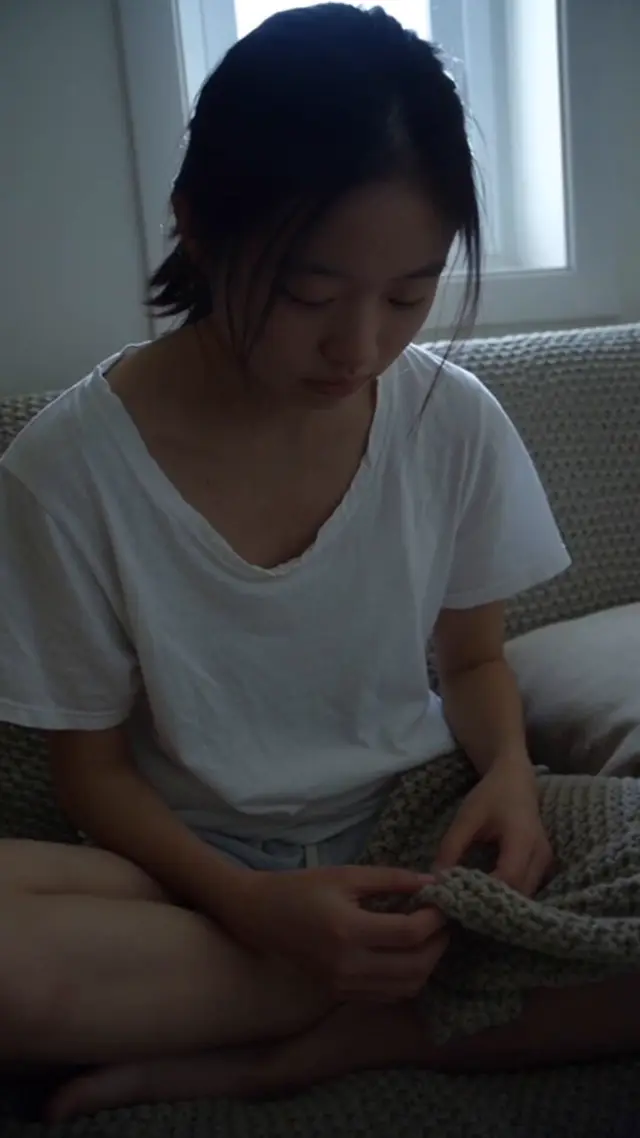
The girl {{Mixed 2}} and the boy {{Mixed 3}} must strictly reference the corresponding characters in the couple's photos, maintaining their respective facial features, face shapes, hairstyles, body types, heights, clothing, and temperament. No face-swapping or clothing exchange.

The girl has repeatedly considered the breakup. She is not here to argue, nor does she expect him to beg her to stay. She is calm on the surface, with true emotions hidden in pauses, breaths, swallowing, and averted gazes.

The boy initially thinks this is just a normal argument. He is eager to find a specific mistake to explain, failing to realize the problem is long-term emotional alienation.

### Scene Setting

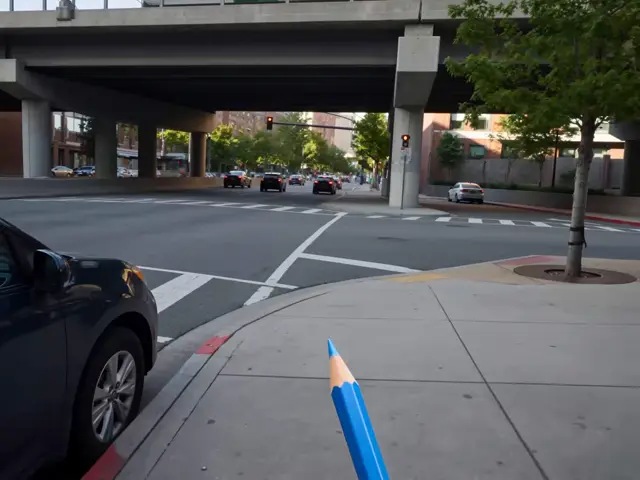
Downstairs of an apartment building at dusk {{Mixed 1}}.

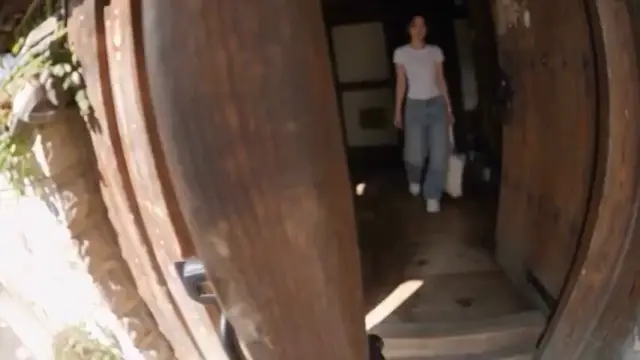
The outdoor environment is a cool natural twilight, with warm yellow light spilling from the glass door of the stairwell. The girl stands below the steps with a small suitcase, one hand resting on the handle.

The background contains only the faint sound of leaves in the wind, distant traffic, the opening/closing of the stairwell door, and the sound of suitcase wheels. No subtitles, no sentimental soundtrack, no slow motion.

### Cinematography Rules

Use standard TV drama emotional scene single-person shot-reverse-shot narrative.

- The girl always faces the left side of the frame.
- The boy always faces the right side of the frame.
- Eye levels and directions must match correctly.
- The camera must remain on one side of the 180-degree axis.
- Start with a wide shot to establish the environment and the suitcase.
- Use medium-close shots (chest up) for normal dialogue.
- Gradually move to close-ups (shoulders up) as the conflict deepens.
- Retain a brief reaction after key lines; do not cut immediately after the dialogue ends.
- No exaggerated zooms, rotating camera movements, handheld selfies, or idol-drama style soft focus.

---

### 【00:00–00:02.2 | Shot 1: Environmental Wide Shot】

Framing: Fixed wide shot
Characters: Only the girl in frame

The apartment building, steps, glass door, and the girl's full body enter the frame simultaneously.

The girl stands alone below the steps, suitcase on her right. She looks down to check if the handle is locked, her movements quiet and clear.

She does not pace or check her phone anxiously, indicating she is not acting on impulse but has decided to leave.

The sound of the glass door opening comes from behind her.

The boy has not entered the frame yet; his voice comes from behind the girl:

"Are you really leaving?"

The girl pauses her movement with the handle but does not turn around immediately.

---

### 【00:02.2–00:05 | Shot 2: Boy's Medium-Close Shot】

Framing: Medium-close shot (chest up)
Position: Boy at a three-quarter profile, facing the right side of the frame

Cut to the boy's single shot.

He has just chased out from the stairwell, breathing slightly fast. His first reaction is to look at the suitcase off-screen, then toward the girl.

His brows knit slightly, and his speaking speed is slightly faster than normal:

"Just because I didn't go to the hospital that day?"

As he says this, he has already entered an explanatory state.

After the last word, his lips remain slightly parted, as if preparing to add reasons immediately.

Do not cut away immediately; briefly hold his expression as he waits for her answer.

---

### 【00:05–00:08 | Shot 3: Girl's Medium-Close Shot】

Framing: Medium-close shot (waist up), then very slowly moving closer
Position: Girl at a three-quarter frontal view, facing the left side of the frame

The girl has turned to face the boy.

She looks at him first without speaking immediately. There is no anger on her face, only the exhaustion of "so this is how you understand it" for a fleeting moment.

She answers softly:

"No."

Pause for about half a second.

"Your mom's surgery that day, I knew you couldn't get away."

This line must not be sarcastic, nor should she emphasize the word "knew."

She is telling the truth. She understood why he didn't show up and never intended to use it to force an apology.

After speaking, her gaze shifts from his face to the ground between them.

Her fingers resting on the suitcase handle tighten slightly.

---

### 【00:08–00:10.2 | Shot 4: Boy's Close-Up】

Framing: Close-up (shoulders up)
Position: Maintain boy facing the right side of the frame

After hearing "No," the boy's brows do not relax; instead, he looks more confused.

His prepared explanation suddenly loses its purpose.

After a brief pause, he takes half a step toward her, his voice filled with irrepressible anxiety:

"Then what exactly are you blaming me for?"

The word "blaming" is slightly emphasized.

After speaking, he looks straight at her, as if waiting for her to list a mistake that can be fixed.

Do not make it look like shouting, and do not glare. The focus is on his urgent need for a concrete answer.

---

### 【00:10.2–00:15.5 | Shot 5: Girl's Emotional Close-Up】

Framing: Close-up (shoulders up)
Position: Near frontal, but the girl's gaze is still toward the boy on the left

This is the most important shot of the entire video.

When cutting to this, the girl does not speak immediately.

She takes a small breath, then exhales gently. Her eyes linger on his face for a moment, as if judging whether it is still meaningful to tell the truth.

She says:

"I'm not blaming you."

Pause.

The boy seems to want to interject off-screen, but she continues:

"It's just that the day I felt the worst..."

At this point, she briefly lowers her gaze.

Not crying, but needing a moment to complete the second half of the sentence.

She swallows slightly and looks up at him again:

"The first person I thought of... was no longer you."

The last few words are noticeably softer but remain clear.

After speaking, she does not avert her gaze, continuing to look at him, waiting for him to truly understand this sentence.

Her eyes can show a very slight sense of moisture, but she must not cry immediately. Her mouth must not tremble into a crying expression, and her cheeks must not suddenly flush.

The camera lingers for about half a second after the dialogue ends.

There is no relief on her face, nor the pleasure of successful revenge, only the quiet and exhaustion of admitting the truth.

---

### 【00:15.5–00:16.8 | Shot 6: Boy's Reaction Close-Up】

Framing: Face close-up, but keeping the full top of the head, chin, and part of the shoulders
Position: Boy facing the right side of the frame

Cut to the boy.

He does not understand immediately.

His previously tense brows relax slightly, but his eyes freeze. His lips move, as if a specific person flashed through his mind first.

He asks subconsciously:

"...Who is it?"

The tone is lowered, not an angry interrogation, but fear of the answer.

After asking, his gaze remains firmly on the girl, completely unaware that he asked the wrong question.

---

### 【00:16.8–00:19.3 | Shot 7: Girl's Final Close-Up】

Framing: Close-up (shoulders up)
Position: Same position and lighting as Shot 5

Upon hearing "Who is it?", a very slight change appears in the girl's eyes.

Not shock, not anger.

The last bit of expectation she had completely vanishes at this moment.

She exhales briefly through her nose, averts her gaze, and then looks at him again:

"See..."

Pause for half a second.

"You still didn't understand."

The tone is calm, without sarcasm.

After speaking, she no longer waits for an answer.

Her gaze shifts from his face, and then her body turns toward the right side of the frame, exiting the current composition.

The camera does not follow her.

---

### 【00:19.3–00:20 | Shot 8: Boy's Ending Close-Up】

Framing: Boy's close-up (shoulders up)
Characters: Only the boy in frame

Cut back to the boy.

The sound of suitcase wheels rolling starts off-screen.

The boy subconsciously raises a hand, as if preparing to call her back.

The hand stops near his chest.

He opens his mouth but makes no sound.

His gaze moves slowly in the direction the girl left off-screen.

Finally, it stops on his expression, where he finally begins to realize the problem was not "another person."

The sound of the suitcase wheels fades away, and the scene ends naturally.

### Authenticity Constraints

- Shot-reverse-shot must maintain consistent eye direction, ambient light, and spatial axis.
- The girl must not be full of sorrow from the start, nor should she suddenly cry after key lines.
- The boy must not be exaggeratedly shocked, furious, grabbing his hair, or rushing to pull the girl.
- Do not use mechanical acting where "every line corresponds to an expression."
- Let the characters understand the lines first, then react through pauses, breathing, and changes in gaze.
- Allow slight slurring, breathing, and pauses while speaking; do not use a broadcast voice.
- Do not film the girl's back as she walks away at the end.
时长:20秒
形式:第三人称写实感情戏,多镜头剪辑
场景:傍晚公寓楼下
核心冲突:男生以为女生因为自己某一次缺席而分手;女生真正离开的原因,是她已经不再本能地依赖他。男生最后追问“是谁”,再次证明他没有理解她。
### 角色与表演基调
女生 {{Mixed 2}} 与男生 {{Mixed 3}} 分别严格参考情侣图片中的对应人物,保持各自的五官、脸型、发型、体型、身高、服装和气质,不能混脸或交换服装。
女生已经反复考虑过分手。她不是来吵架,也没有期待男生挽留。表面平静,真正的情绪藏在停顿、呼吸、吞咽和移开的视线里。
男生开始时认为这只是一次普通争吵。他急于找到一件具体的错事进行解释,却没有意识到问题是长期积累的情感疏离。
### 场景设定
傍晚的公寓楼下 {{Mixed 1}} 。
室外是偏冷的自然暮色,楼道玻璃门内透出暖黄色灯光。女生站在台阶下,身旁放着一个小行李箱,一只手始终搭在拉杆上。
背景只有轻微树叶风声、远处车辆声、楼道门开合声和行李箱轮子声。无字幕、无煽情配乐、无慢动作。
### 摄影规则
采用正常电视剧感情戏的单人正反打叙事。
- 女生始终面向画面左侧。
- 男生始终面向画面右侧。
- 两人的视线高度和方向正确衔接。
- 摄影机始终停留在同一条180度轴线的一侧。
- 开场使用全景交代环境和行李箱。
- 普通对话使用胸口以上中近景。
- 冲突加深后逐渐进入肩部以上近景。
- 最关键的台词后保留短暂反应,不要台词一结束就立即切镜。
- 不使用夸张推镜、旋转运镜、手持自拍或偶像剧式柔光。
---
### 【00:00–00:02.2|镜头一:环境全景】
景别:固定全景
人物:只有女生入画
公寓楼、台阶、玻璃门和女生的完整身体同时进入画面。
女生独自站在台阶下,行李箱放在右手边。她低头检查拉杆是否扣好,动作安静而明确。
她没有来回走动,也没有焦躁地看手机,说明她不是临时赌气,而是已经决定要离开。
身后的玻璃门传来打开的声音。
男生尚未进入画面,声音先从女生背后传来:
“你真要走?”
女生整理拉杆的动作停了一下,但没有立即回头。
---
### 【00:02.2–00:05|镜头二:男生中近景】
景别:胸口以上中近景
机位:男生四分之三侧面,面向画面右侧
切到男生单人镜头。
他刚从楼道里追出来,呼吸略微急促。第一反应先看画外的行李箱,再看向女生所在的方向。
他眉头轻轻收紧,语速比正常稍快:
“就因为那天我没去医院?”
说这句话时,他已经提前进入解释状态。
最后一个字说完后,他嘴唇仍然微微张着,像是准备马上补充理由。
镜头不要立刻切走,短暂保留他等待女生回答的表情。
---
### 【00:05–00:08|镜头三:女生中近景】
景别:腰部以上中近景,随后非常缓慢地靠近
机位:女生四分之三正面,面向画面左侧
女生已经转过身面对男生。
她先看着他,没有马上说话。脸上没有愤怒,只有一瞬间“原来你是这样理解的”的疲惫。
她轻声回答:
“不是。”
停顿约半秒。
“你妈那天手术,我知道你走不开。”
这句话不能带讽刺,也不能咬重“知道”两个字。
她说的是真话。她理解男生当时为什么没有出现,也从未准备拿这件事逼他道歉。
说完以后,她的视线从男生脸上移开,落到两人之间的地面。
搭在行李箱拉杆上的手指轻轻收紧。
---
### 【00:08–00:10.2|镜头四:男生近景】
景别:肩部以上近景
机位:保持男生面向画面右侧
男生听到“不是”以后,眉头没有松开,反而更加困惑。
他原本准备好的解释突然失去作用。
短暂停顿后,他向女生方向靠近半步,声音里出现压不住的焦躁:
“那你到底在怪我什么?”
“怪”字略微加重。
他说完以后直直看着女生,像是在等她列出一件可以解决的错误。
不要表现成吼叫,也不要瞪眼。重点是他迫切需要一个具体答案。
---
### 【00:10.2–00:15.5|镜头五:女生情绪近景】
景别:肩部以上近景
机位:接近正面,但女生视线仍看向画面左侧的男生
这是整段视频最重要的镜头。
切过来时,女生没有立刻说话。
她先吸进一小口气,随后轻轻呼出。眼神在男生脸上停留片刻,像是在判断说出真相还有没有意义。
她说:
“我没怪你。”
停顿。
男生似乎想在画外接话,但女生继续说下去:
“只是那天我最难受的时候……”
说到这里,她短暂低下视线。
不是低头哭,而是需要一点时间把后半句话说完整。
她轻轻吞咽一下,重新抬眼看向男生:
“第一个想到的人,已经不是你了。”
最后几个字明显放轻,但保持清楚。
她说完后不躲开视线,继续看着男生,等待他真正理解这句话。
眼眶可以出现非常轻微的湿润感,但不能立刻流泪。嘴角不能颤抖成哭相,脸颊不能突然泛红。
镜头在台词结束后继续停留约半秒。
她脸上没有解脱,也没有报复成功的快感,只有承认事实后的安静和疲惫。
---
### 【00:15.5–00:16.8|镜头六:男生反应特写】
景别:面部近景,但保留完整头顶、下巴和部分肩膀
机位:男生面向画面右侧
切到男生。
他没有马上理解。
原本紧绷的眉头稍微松开,眼睛却停住。嘴唇动了一下,像是脑中先闪过一个具体的人。
他下意识问:
“……是谁?”
语气降低,不是愤怒质问,而是害怕答案。
问完后, his视线牢牢停在女生身上,完全没有意识到自己问错了问题。
---
### 【00:16.8–00:19.3|镜头七:女生最终近景】
景别:肩部以上近景
机位:与镜头五保持相同位置和光线
女生听见“是谁”以后,眼神出现非常轻微的变化。
不是震惊,也不是生气。
她原本还残留的一点期待,在这一刻彻底消失。
她短促地从鼻腔呼出一口气,视线偏开一下,随后重新看向男生:
“你看……”
停顿半秒。
“你还是没听懂。”
语气平静,没有讽刺。
说完后,她不再等待回答。
她的视线先从男生脸上移开,随后身体转向画面右侧,离开当前构图。
镜头不追随她。
---
### 【00:19.3–00:20|镜头八:男生结尾特写】
景别:男生肩部以上近景
人物:只有男生入画
切回男生。
画外传来行李箱轮子开始滚动的声音。
男生下意识抬起一只手,像是准备叫住她。
手只抬到胸口附近便停住。
他张开嘴,却没有发出声音。
视线随着画外女生离开的方向缓慢移动。
最后停在他终于开始意识到问题并不是“另一个人”的表情上。
行李箱轮子的声音逐渐远去,画面自然结束。
### 真实性约束
- 正反打必须保持视线方向、环境光线 and 空间轴线一致。
- 女生不能从开场就满脸悲伤,也不能在关键台词后突然落泪。
- 男生不能夸张震惊、暴怒、抓头或冲上去拉扯女生。
- 不使用“每句台词对应一个表情”的机械表演。
- 先让角色听懂台词,再通过停顿、呼吸和视线变化产生反应。
- 允许说话时轻微吞字、换气和停顿,不使用播音腔。
- 最后不拍女生远去的背影
The rights to this prompt belong to its author @liyue_ai. You are responsible for any commercial use — promoting AI tools, aggregators or Telegram bots: mozgi.io accepts no liability. Details →