mozgi
GPT Image 2.0
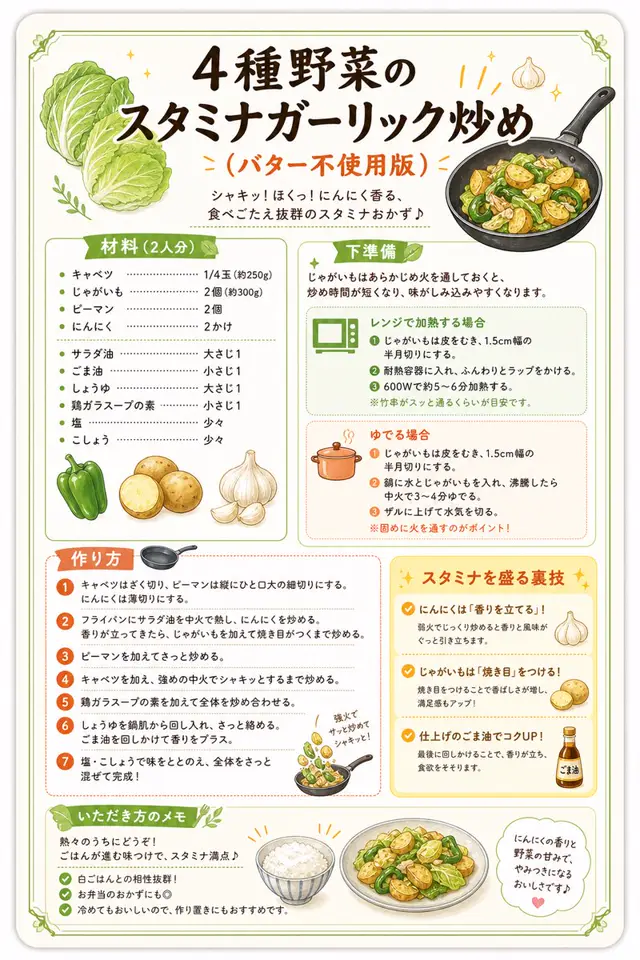
Un poster infografico verticale con ricetta giapponese, illustrazioni di verdure ad acquerello e tipografi
Prompt
Obiettivo: Creare un poster verticale giapponese di infografica ricetta per 4種野菜のスタミナガーリック炒め, con un’estetica calda da ricettario disegnato a mano e una tipografia giapponese perfettamente leggibile.

Tela: Layout verticale 2:3, sfondo in carta bianco sporco, angoli arrotondati, sottile doppia cornice ornamentale verde con piccoli motivi di foglie agli angoli. Usare illustrazioni di cibo in morbido stile acquerello, caratteri giapponesi arrotondati e amichevoli, testo del titolo principale marrone scuro, nastri verdi per le sezioni, accenti arancioni, linee divisorie tratteggiate e scintille discrete.

Intestazione superiore: Grande titolo centrato: 4種野菜のスタミナガーリック炒め. Subito sotto, sottotitolo arancione: (バター不使用版). Aggiungere sotto un piccolo slogan giapponese: "シャキッ!ほくっ!にんにく香る、食べごたえ抜群のスタミナおかず♪". Posizionare un’illustrazione grande di un cavolo in alto a sinistra, una piccola icona di una testa d’aglio vicino all’angolo superiore destro e una padella nera in alto a destra, piena di cavolo saltato, peperone verde, fettine di patata e aglio.

Layout principale: Usare cinque blocchi di contenuto distinti, disposti come una scheda ricetta: 1 riquadro degli ingredienti in alto a sinistra, 1 riquadro della preparazione in alto a destra, 1 riquadro dei passaggi di cottura al centro a sinistra, 1 riquadro dei consigli tecnici al centro a destra e 1 riquadro delle note sul servizio lungo tutta la parte inferiore.

Blocco ingredienti: Intestazione su nastro verde "材料(2人分)". Elencare esattamente 10 ingredienti con linee guida puntinate e quantità: 1) キャベツ — 1/4玉(約250g), 2) じゃがいも — 2個(約300g), 3) ピーマン — 2個, 4) にんにく — 2かけ, 5) サラダ油 — 大さじ1, 6) ごま油 — 小さじ1, 7) しょうゆ — 大さじ1, 8) 鶏ガラスープの素 — 小さじ1, 9) 塩 — 少々, 10) こしょう — 少々. In fondo al riquadro includere tre piccole illustrazioni: peperoni verdi, patate con una tagliata a metà e spicchi d’aglio.

Blocco preparazione: Intestazione su nastro verde "下準備" con il testo esplicativo: "じゃがいもはあらかじめ火を通しておくと、炒め時間が短くなり、味がしみ込みやすくなります。" Includere esattamente 2 metodi di preparazione in sottoschede arrotondate. La prima sottoscheda verde ha il titolo "レンジで加熱する場合", un’icona del microonde ed esattamente 3 passaggi numerati: 1) じゃがいもは皮をむき、1.5cm幅の半月切りにする。 2) 耐熱容器に入れ、ふんわりとラップをかける。 3) 600Wで約5〜6分加熱する。 Aggiungere la nota: "※竹串がスッと通るくらいが目安です。" La seconda sottoscheda arancione ha il titolo "ゆでる場合", un’icona della pentola ed esattamente 3 passaggi numerati: 1) じゃがいもは皮をむき、1.5cm幅の半月切りにする。 2) 鍋に水とじゃがいもを入れ、沸騰したら中火で3〜4分ゆでる。 3) ザルに上げて水気を切る。 Aggiungere la nota: "※固めに火を通すのがポイント!".

Blocco dei passaggi di cottura: Intestazione su nastro arancione "作り方". Mostrare esattamente 7 cerchi arancioni numerati con il testo giapponese dei passaggi: 1) キャベツはざく切り、ピーマンは縦にひと口大の細切りにする。にんにくは薄切りにする。 2) フライパンにサラダ油を中火で熱し、にんにくを炒める。香りが立ってきたら、じゃがいもを加えて焼き目がつくまで炒める。 3) ピーマンを加えてさっと炒める。 4) キャベツを加え、強めの中火でシャキッとするまで炒める。 5) 鶏ガラスープの素を加えて全体を炒め合わせる。 6) しょうゆを鍋肌から回し入れ、さっと絡める。ごま油を回しかけて香りをプラス。 7) 塩・こしょうで味をととのえ、全体をさっと混ぜて完成! Aggiungere vicino alla parte inferiore destra del blocco una piccola illustrazione di una padella con verdure che volano e una nota scritta a mano "強火でサッと炒めてシャキッ!".

Blocco dei consigli tecnici: Intestazione giallo-arancione "スタミナを盛る裏技" con scintille. Includere esattamente 3 righe di consigli, ciascuna con un’icona arancione di spunta e una piccola illustrazione a destra: 1) "にんにくは「香りを立てる」!" con una testa d’aglio, 2) "じゃがいもは「焼き目」をつける!" con patate, 3) "仕上げのごま油でコクUP!" con una bottiglia di olio di sesamo etichettata "ごま油". Sotto ogni consiglio usare un breve testo esplicativo in giapponese.

Blocco inferiore delle note sul servizio: Intestazione su nastro verde "いただき方のメモ". Includere il testo "熱々のうちにどうぞ!ごはんが進む味つけで、スタミナ満点♪" ed esattamente 3 punti elenco con spunta verde: 1) 白ごはんとの相性抜群! 2) お弁当のおかずにも◎ 3) 冷めてもおいしいので、作り置きにもおすすめです。 Lungo il bordo inferiore aggiungere tre illustrazioni di cibo: una ciotola di riso bianco, una porzione impiattata di verdure saltate all’aglio e un fumetto con il testo "にんにくの香りと野菜の甘みで、やみつきになるおいしさです♪" e un piccolo cuore.

Vincoli visivi: Mantenere tutto il testo giapponese nitido e leggibile, conservare un layout equilibrato da rivista di ricette, non usare fotografie, filigrane, sezioni aggiuntive, ingredienti aggiuntivi o passaggi aggiuntivi.
Goal: Create a vertical Japanese recipe infographic poster for 4種野菜のスタミナガーリック炒め, with a warm hand-drawn cookbook aesthetic and perfectly legible Japanese typography.

Canvas: Portrait 2:3 layout, off-white paper background, rounded corners, thin double green ornamental border with small leaf flourishes in the corners. Use soft watercolor-style food illustrations, friendly rounded Japanese fonts, dark brown main title text, green section ribbons, orange accents, dotted divider lines, and subtle sparkles.

Top header: Large centered headline text: 4種野菜のスタミナガーリック炒め. Directly underneath, orange subtitle: (バター不使用版). Add a small Japanese tagline below: "シャキッ!ほくっ!にんにく香る、食べごたえ抜群のスタミナおかず♪". Place a large illustrated cabbage on the upper left, a small garlic bulb icon near the upper right, and a black frying pan on the upper right filled with stir-fried cabbage, green bell pepper, potato slices, and garlic.

Main layout: Use five distinct content blocks arranged like a recipe card: 1 ingredients box at upper left, 1 preparation box at upper right, 1 cooking steps box at middle left, 1 technique tips box at middle right, and 1 serving memo box across the bottom.

Ingredients block: Green ribbon header "材料(2人分)". List exactly 10 ingredients with dotted leader lines and amounts: 1) キャベツ — 1/4玉(約250g), 2) じゃがいも — 2個(約300g), 3) ピーマン — 2個, 4) にんにく — 2かけ, 5) サラダ油 — 大さじ1, 6) ごま油 — 小さじ1, 7) しょうゆ — 大さじ1, 8) 鶏ガラスープの素 — 小さじ1, 9) 塩 — 少々, 10) こしょう — 少々. Include three small illustrations at the bottom of this box: green bell peppers, potatoes with one cut open, and garlic cloves.

Preparation block: Green ribbon header "下準備" with explanatory text: "じゃがいもはあらかじめ火を通しておくと、炒め時間が短くなり、味がしみ込みやすくなります。" Include exactly 2 preparation methods in rounded subcards. First green subcard titled "レンジで加熱する場合" with microwave icon and exactly 3 numbered steps: 1) じゃがいもは皮をむき、1.5cm幅の半月切りにする。 2) 耐熱容器に入れ、ふんわりとラップをかける。 3) 600Wで約5〜6分加熱する。 Add note: "※竹串がスッと通るくらいが目安です。" Second orange subcard titled "ゆでる場合" with pot icon and exactly 3 numbered steps: 1) じゃがいもは皮をむき、1.5cm幅の半月切りにする。 2) 鍋に水とじゃがいもを入れ、沸騰したら中火で3〜4分ゆでる。 3) ザルに上げて水気を切る。 Add note: "※固めに火を通すのがポイント!".

Cooking steps block: Orange ribbon header "作り方". Show exactly 7 numbered orange circles with Japanese step text: 1) キャベツはざく切り、ピーマンは縦にひと口大の細切りにする。にんにくは薄切りにする。 2) フライパンにサラダ油を中火で熱し、にんにくを炒める。香りが立ってきたら、じゃがいもを加えて焼き目がつくまで炒める。 3) ピーマンを加えてさっと炒める。 4) キャベツを加え、強めの中火でシャキッとするまで炒める。 5) 鶏ガラスープの素を加えて全体を炒め合わせる。 6) しょうゆを鍋肌から回し入れ、さっと絡める。ごま油を回しかけて香りをプラス。 7) 塩・こしょうで味をととのえ、全体をさっと混ぜて完成! Add a tiny pan illustration near the lower right of this block with vegetables flying and a handwritten note "強火でサッと炒めてシャキッ!".

Technique tips block: Yellow-orange header "スタミナを盛る裏技" with sparkles. Include exactly 3 tip rows, each with an orange check icon and a small illustration on the right: 1) "にんにくは「香りを立てる」!" with garlic bulb, 2) "じゃがいもは「焼き目」をつける!" with potatoes, 3) "仕上げのごま油でコクUP!" with a sesame oil bottle labeled "ごま油". Use short explanatory Japanese text beneath each tip.

Bottom serving memo block: Green ribbon header "いただき方のメモ". Include the text "熱々のうちにどうぞ!ごはんが進む味つけで、スタミナ満点♪" and exactly 3 green check bullet points: 1) 白ごはんとの相性抜群! 2) お弁当のおかずにも◎ 3) 冷めてもおいしいので、作り置きにもおすすめです。 Add three food illustrations along the bottom: a bowl of white rice, a plated serving of the vegetable garlic stir-fry, and a speech bubble saying "にんにくの香りと野菜の甘みで、やみつきになるおいしさです♪" with a small heart.

Visual constraints: Keep all Japanese text crisp and readable, maintain a balanced magazine-recipe layout, use no photographs, no watermark, no extra sections, and no additional ingredients or steps.
- Il prompt è in giapponese: incollalo così com'è, il modello lo capisce.
I diritti su questo prompt appartengono all'autore @jijian0426. Dell'uso commerciale — promozione di strumenti IA, aggregatori, bot Telegram — rispondi tu: mozgi.io non si assume alcuna responsabilità. Dettagli →