mozgi
Nano Banana Pro
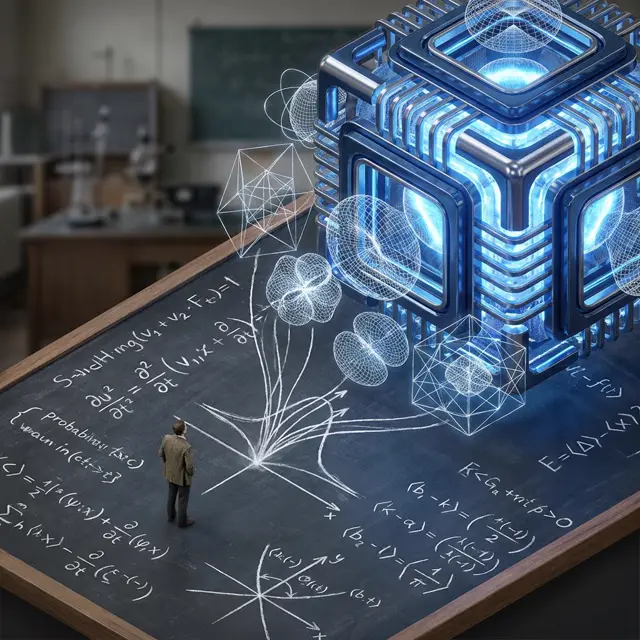
Quattro teorie scientifiche si trasformano da formule sulla lavagna in strutture 3D con un piccolo scienziato
Prompt
Griglia 2x2, esegui questa operazione per 4 celebri argomenti scientifici o matematici di livello PhD <instructions>
 Variabile di input:  Teorema / Formula
Fase 1: Scomposizione schematica
Analizza la notazione: Identifica il linguaggio visivo principale dello scienziato (gesso sulla lavagna? Inchiostro sulla pergamena? Matita su carta millimetrata?).
Identifica la "Structure": Se questa teoria fosse un edificio, che aspetto avrebbe?
Logica: Teoria del caos -> Guglia frattale. Termodinamica -> Blocco motore.
Fase 2: Transizione dimensionale
La base: Una superficie piana ricoperta di [Notation Medium] (ad esempio, una lavagna in ardesia ricoperta di equazioni scritte col gesso).
L'estrusione: Le linee di gesso si sollevano fisicamente dalla superficie. Iniziano come wireframe bianchi, poi acquistano opacità e infine consistenza.
Il culmine: Nella parte superiore dell'immagine, i wireframe si sono completamente solidificati in una struttura fotorealistica e impossibile che rappresenta la teoria.
L'osservatore: Una minuscola figura in scala dello scienziato sta sulla sezione piatta "2D", guardando con meraviglia verso l'imponente struttura "3D" che ha evocato.
Output: Isometria dall'alto, stile "3D mod designer toy", netto contrasto tra le linee abbozzate e la massa solida.
</instructions>
2x2 grid, do this for 4 famous PHD level science or math topics <instructions>
 Input Variable:  Theorem / Formula
Phase 1: Schematic Decomposition
Analyze the Notation: Identify the primary visual language of the scientist (Chalk on blackboard? Ink on parchment? Pencil on graph paper?).
Identify the "Structure": If this theory were a building, what would it look like?
Logic: Chaos Theory -> Fractal Spire. Thermodynamics -> Engine Block.
Phase 2: The Dimensional Transition
The Base: A flat surface covered in the [Notation Medium] (e.g., a slate blackboard covered in chalk equations).
The Extrusion: The chalk lines physically lift off the surface. They begin as white wireframes, then gain opacity, then gain texture.
The Climax: At the top of the image, the wireframes have fully solidified into a photorealistic, impossible structure representing the theory.
The Observer: A tiny, scale-model figure of the scientist stands on the flat "2D" section, looking up in awe at the massive "3D" structure they have summoned.
Output: High-Angle Isometric, "3D mod designer toy" style, stark contrast between sketchy lines and solid mass.
</instructions>
I diritti su questo prompt appartengono all'autore @Gdgtify. Dell'uso commerciale — promozione di strumenti IA, aggregatori, bot Telegram — rispondi tu: mozgi.io non si assume alcuna responsabilità. Dettagli →