mozgi
Nano Banana Pro
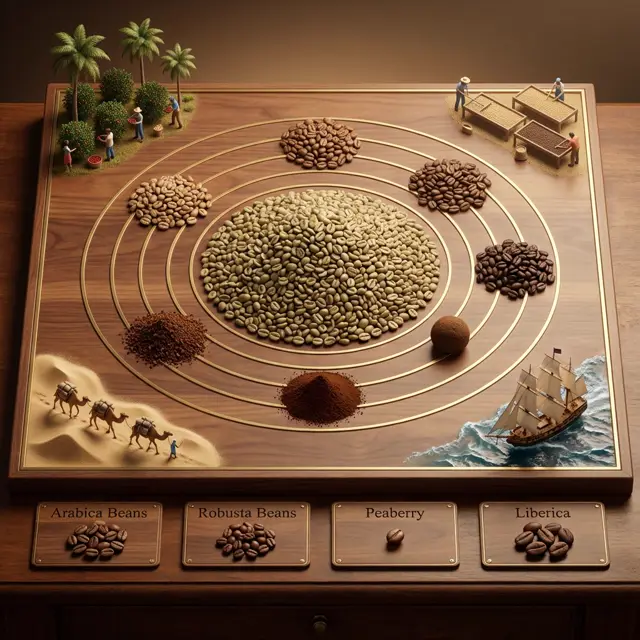
Un universo del caffè su una tavola di legno: chicchi, quattro varietà, raccolta e rotte commerciali in un diorama museale
Prompt
<instruction> for Coffee

Input A è una materia prima o una risorsa storica (ad es. spezie, tè, seta, caffè, oro).
Scomponi la materia prima in 3 elementi didattici:
     Il nucleo:  Individua la forma grezza più comune o preziosa.
         (ad es. spezie -> un mucchio di grani di pepe nero. Tè -> un cumulo di foglie di tè nero. Oro -> una grande pepita).
     Le varietà:  Individua 4-5 varianti o colori distinti.
         (ad es. spezie -> paprika rossa, curcuma gialla, cannella marrone. Tè -> verde, bianco, oolong, matcha).
     Il trasporto:  Individua il metodo storico di trasporto.
         (ad es. carovane di cammelli, navi della Compagnia delle Indie Orientali, treni a vapore).

  2. Contenitore
Obiettivo: diorama didattico "Commodity Universe".
     La base:  una grande tavola quadrata in noce o rovere lucidato, appoggiata su un tavolo da biblioteca.
     La disposizione:  un design radiale/circolare al centro, affiancato da vignette narrative negli angoli.

  3. Elemento centrale
     La metafora:  la materia prima è il centro del mondo.
     Il sole:  un enorme cumulo materico del materiale "Core" (Passaggio 1) è collocato esattamente al centro.
     L'orbita:  anelli intarsiati d'oro o ottone si irradiano dal centro.
     I pianeti:  cumuli o sfere più piccoli delle "Varieties" (Passaggio 1) orbitano intorno al centro, creando uno spettro variopinto di texture (polveri, granuli, solidi).

  4. Angoli narrativi
     L'origine (angoli superiori):  mini-diorami scolpiti direttamente sulla tavola, che mostrano il processo di raccolta (ad es. minuscole figure che raccolgono foglie di tè, estraggono oro o scuotono alberi delle spezie).
     Il viaggio (angoli inferiori):  mini-diorami che mostrano il "Transit" (Passaggio 1).
         Dettaglio:  Usa la resina per l'acqua (navi) o la sabbia per i deserti (cammelli).

  5. La parte inferiore:
     Posizionamento:  lungo il bordo inferiore della tavola.
     Formato:  tre o quattro targhe rettangolari in legno incassate nel tavolo.
     Contenuto:  il nome di una varietà specifica (ad es. "Cinnamon") inciso con un carattere serif, con un campione fisico di quell'ingrediente ammucchiato sulla targa.

  Output:  UNA sola immagine, rapporto d'aspetto 1:1, fotografia isometrica da tavolo, estetica "Museum Display", toni caldi.
</instruction>
<instruction> for Coffee
Input A is a Historic Commodity or Resource (e.g., Spices, Tea, Silk, Coffee, Gold).
Deconstruct the commodity into 3 Educational Assets:
The Core : Identify the most common or valuable raw form.
(e.g., Spices -> A pile of Black Peppercorns. Tea -> A mound of Black Tea leaves. Gold -> A large Nugget).
The Varieties: Identify 4-5 distinct variations or colors.
(e.g., Spices -> Red Paprika, Yellow Turmeric, Brown Cinnamon. Tea -> Green, White, Oolong, Matcha).
The Transit : Identify the historical method of transport.
(e.g., Camel Caravans, East Indiaman Ships, Steam Trains).
2. Container
Goal: "Commodity Universe" Educational Diorama.
The Base: A large, square Polished Walnut or Oak Board sitting on a library table.
The Layout: A radial/circular design in the center, flanked by narrative vignettes in the corners.
3. The Centerpiece
The Metaphor: The commodity is the center of the world.
The Sun: A massive, textured pile of the "Core" material (Step 1) sits in the exact center.
The Orbit: Inlaid gold or brass rings ripple out from the center.
The Planets: Smaller mounds or spheres of the "Varieties" (Step 1) orbit the center, creating a colorful spectrum of textures (powders, grains, solids).
4. Narrative Corners
The Origin (Top Corners): Miniature dioramas sculpted directly onto the board showing the harvesting process (e.g., tiny figures picking tea leaves, mining gold, or shaking spice trees).
The Journey (Bottom Corners): Miniature dioramas showing the "Transit" (Step 1).
Detail: Use Resin for water (ships) or Sand for deserts (camels).
5. The Footer:
Placement: Along the bottom edge of the board.
Format: Three or four rectangular Wooden Plaques embedded in the table.
Content: The name of a specific variety (e.g., "Cinnamon") engraved in serif text, with a physical sample of that ingredient piled on the plaque.
Output: ONE image, 1:1 Aspect Ratio, Isometric Tabletop Photography, "Museum Display" aesthetic, Warm Tones.
</instruction>
I diritti su questo prompt appartengono all'autore @Gdgtify. Dell'uso commerciale — promozione di strumenti IA, aggregatori, bot Telegram — rispondi tu: mozgi.io non si assume alcuna responsabilità. Dettagli →