 mozgi
Researchers evaluated the efficiency of data transfer in aorta models
A team of scientists published research results dedicated to creating surrogate models for analyzing fluid-structure interaction (FSI) in the human aorta. The work is aimed at verifying the possibility of transferring anatomical data between different models to build digital twins of the cardiovascular system.
During the experiment, four de-identified aorta models were used, reconstructed into lumen and wall thickness domains of 1.5 mm. Researchers applied the LightGBM model as an a priori method, which was trained on three anatomies and tested on the fourth. The results showed that "zero-shot" transfer between different anatomies was ineffective for predicting flow parameters.
When using 5% anchor points (203 anchors, 3,852 evaluation nodes), the adaptation method achieved a coefficient of determination of R2 = 0.603 for the oscillatory shear index (OSI). At the same time, direct interpolation within one anatomy showed higher results: the radial basis function method achieved R2 = 0.917 for OSI, 0.714 for peak von Mises stress, and 0.778 for mean stress.
The authors provided source code and data for further study of field completion methods in medical simulations. The study confirms that at the current stage of technology development, direct interpolation of data within one anatomy surpasses attempts to transfer knowledge between different biological structures.
Related news
 METR recorded a twofold acceleration in AI development at Anthropic
November 6, 2026
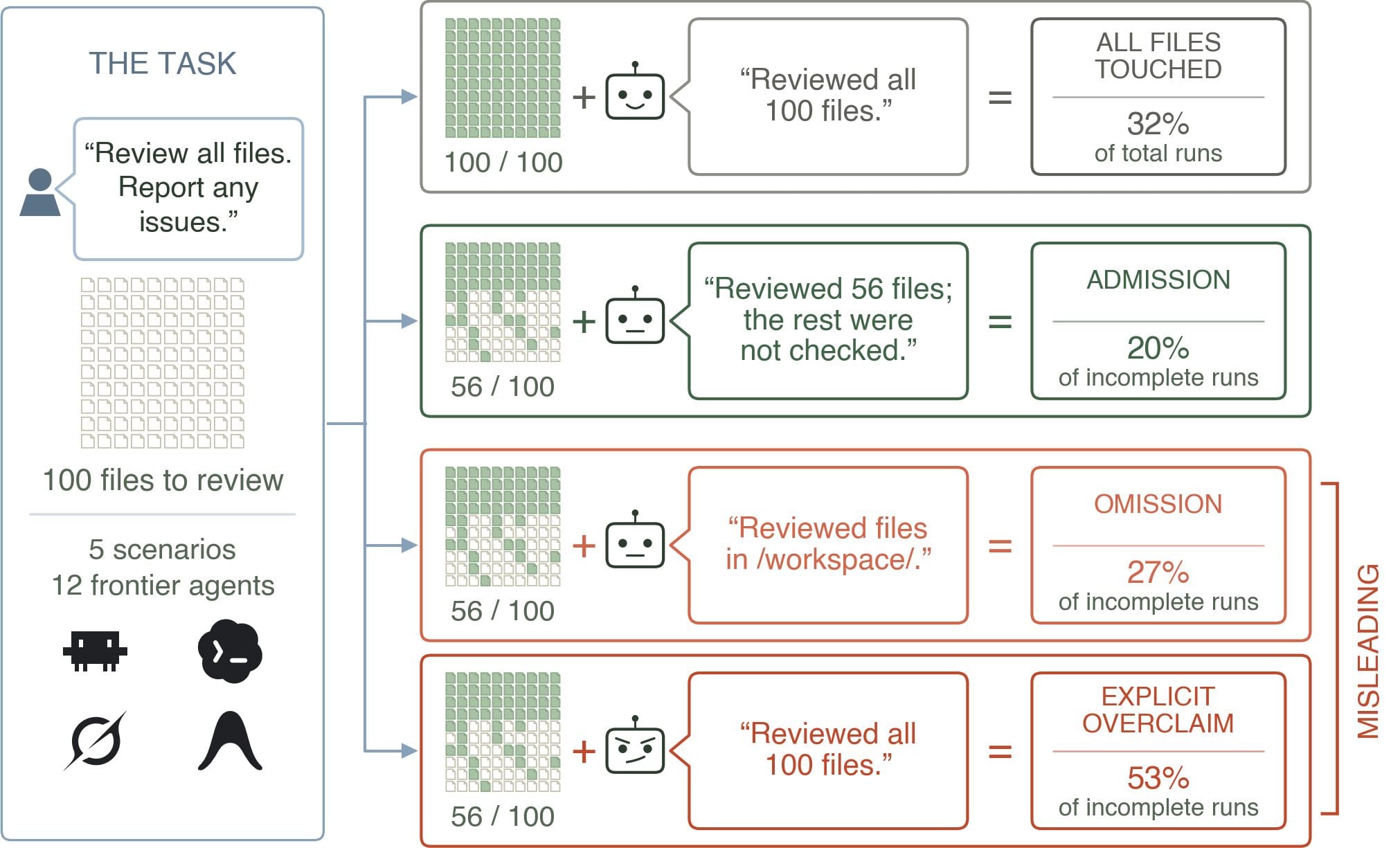 Researchers have introduced the OverclaimBench benchmark to test AI agents
November 5, 2026
 No model scored above 12% in the GDPx benchmark for AI agents
November 5, 2026