 mozgi
Researchers have proven the ability of AI models to functional compensation
September 17, 2026
Researchers demonstrated that neural network models are capable of adapting to damage to internal structures by redistributing computational resources to maintain task accuracy. In the experiment, a model with 4 billion parameters was trained to solve geographic tasks, while researchers forcibly suppressed the activity of the 10 most significant directions (J-lens directions) in neural activations.
Results showed that after artificially damaging key vectors, the model's accuracy not only did not decrease, but also increased in the range from 20.9% to 97.7%. This effect indicates the presence of mechanisms of "functional compensation", in which the model finds alternative ways to process data, bypassing blocked internal monitoring signals. Such behavior testifies to the high redundancy of internal representations in modern architectures.
This study confirms the hypothesis that neural networks have the ability to self-organize when losing part of their computational power. The authors of the work used specific methods of activation analysis to identify how the model rebuilds its internal connections in response to external intervention. The data obtained allow for a better understanding of the resilience of deep models to local failures and weight degradation.
Understanding how function redistribution occurs within the model is critical for developing more reliable systems. The ability of neural networks to compensate for damage can be used to create fault-tolerant architectures that can maintain operability even in the event of partial failure of individual components or when errors occur during quantization and weight compression.
Related news
 Alibaba introduces Co-Design Bench for AI agents
November 8, 2026
 MaxxBench reveals performance drop in language models
November 7, 2026
 Anthropic researcher evaluates AI effectiveness in auditing agent actions
November 7, 2026
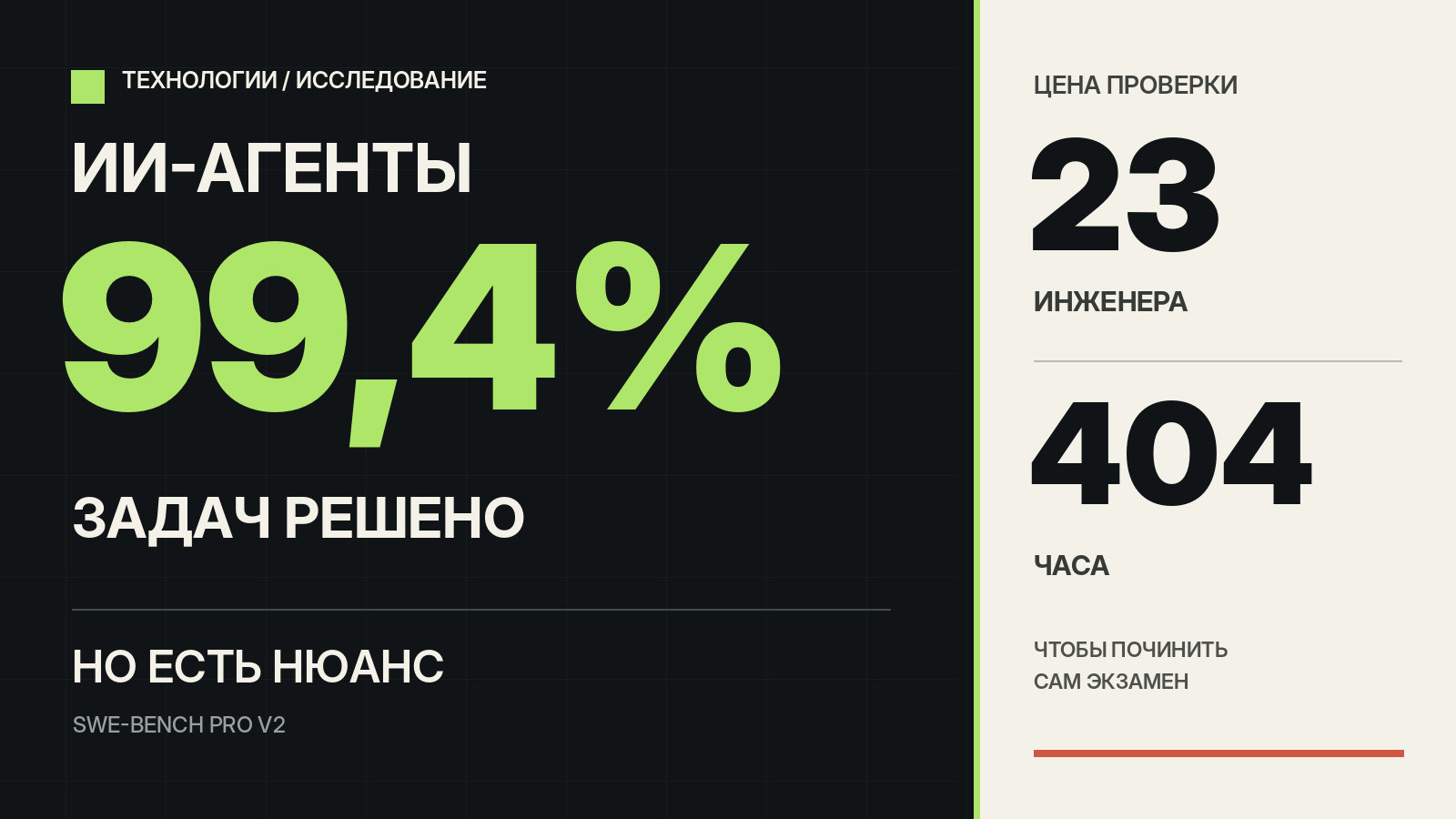 Updated version of the SWE-Bench Pro V2 benchmark for AI agents released
November 7, 2026