 mozgi
IBM Research introduced the ALTK framework for assessing the stability of AI agents
Researchers from IBM Research introduced ALTK — a specialized framework for quantitative evaluation of the reproducibility of AI agent actions. The tool allows identifying hidden errors in reasoning chains that lead to different results when performing identical tasks at different times.
The ALTK methodology focuses on analyzing the agent's "trajectories". The system performs a series of 50-100 iterations for each task, recording deviations in final answers and intermediate steps. During tests on standard benchmarks, it was found that even models with a high average success rate demonstrate result variability of up to 35% when re-run in identical conditions.
The framework includes a module for automatic comparison of execution logs, which classifies errors into "logical" and "instrumental". The tool supports integration with popular execution environments, allowing developers to track the consistency score in real-time. These metrics help understand whether the agent's success is the result of a reliable algorithm or a random coincidence when generating tokens.
The implementation of such evaluation systems is becoming a critical step for transitioning from prototypes to industrial AI agents. Standardizing reproducibility metrics allows developers to more accurately adjust temperature and system prompts, minimizing the risk of unpredictable behavior in critical business processes where the accuracy of executing a sequence of actions is more important than the model's creativity.
Related news
 Anthropic researcher evaluates AI effectiveness in auditing agent actions
November 7, 2026
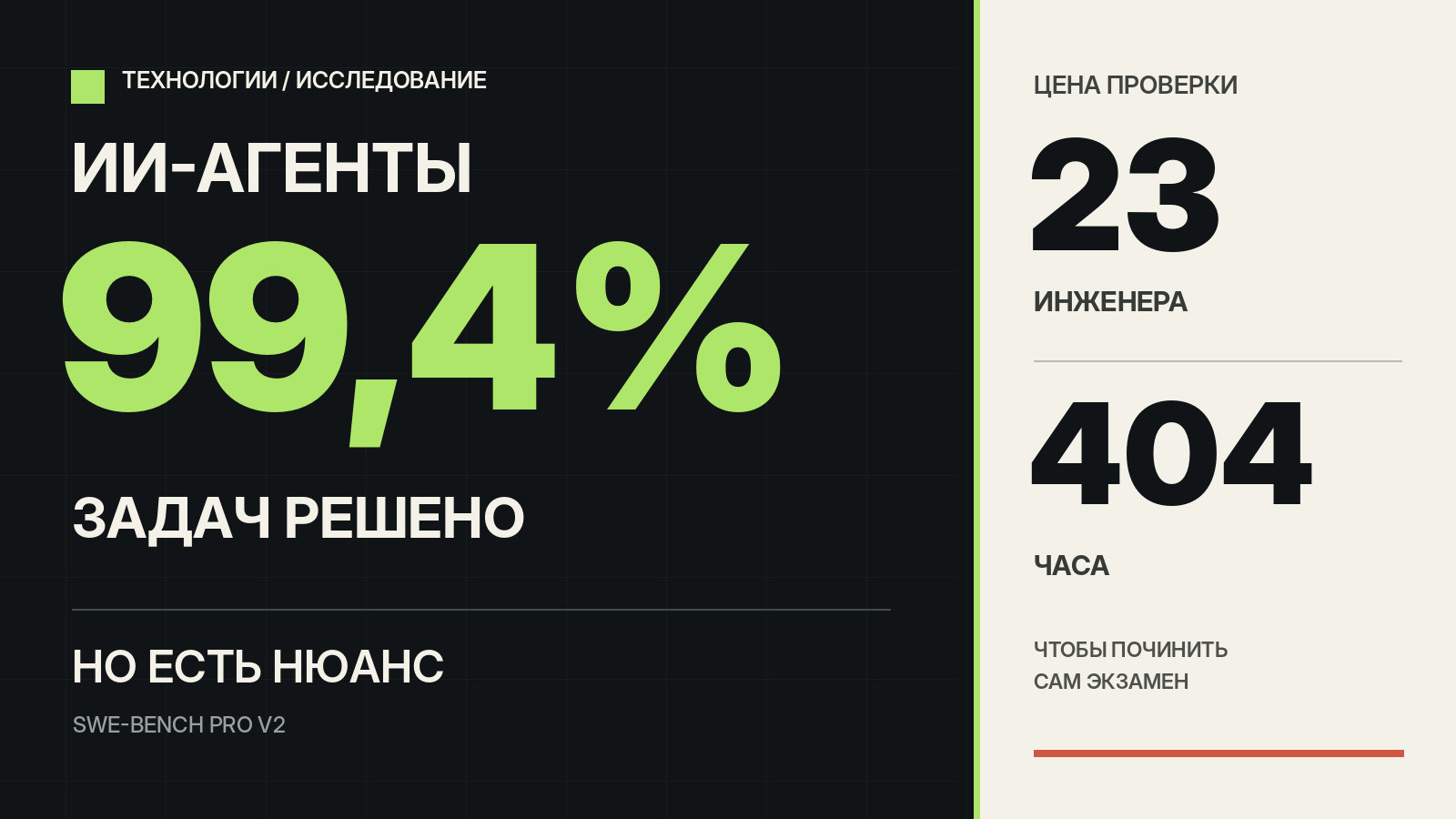 Updated version of the SWE-Bench Pro V2 benchmark for AI agents released
November 7, 2026
 Into the Unknown benchmark reveals AI agents' failure in autonomous research
November 7, 2026
 Anthropic has published research on the memory architecture of AI agents
November 7, 2026