 mozgi
Researchers assessed the impact of AI on the cognitive abilities of young people

A group of scientists from the Norwegian University of Science and Technology published the results of a large-scale meta-analysis dedicated to the change in search habits among users aged 9 to 18 years. The study covered 173 scientific papers focused on the interaction of the younger generation with generative models.
The main conclusion of the work is that the use of AI tools in their current form does not have a statistically significant impact on the development of critical thinking. Despite the concerns of experts, the data does not confirm either the degradation of cognitive skills or their significant strengthening with regular use of chatbots instead of traditional search systems.
A key trend recorded in the report is the massive rejection of Google by young people in favor of AI assistants. The authors note that this transition is happening faster than the academic community is able to assess the long-term consequences for the formation of search and information verification skills in children and adolescents.
Researchers emphasize the presence of a significant "knowledge gap" regarding the impact of algorithms on the developing brain. In the coming years, longitudinal tests will be required to understand how the process of acquiring knowledge changes when a probabilistic model becomes the primary source of answers, rather than an indexed list of web pages.
Related news
 Anthropic researcher evaluates AI effectiveness in auditing agent actions
November 7, 2026
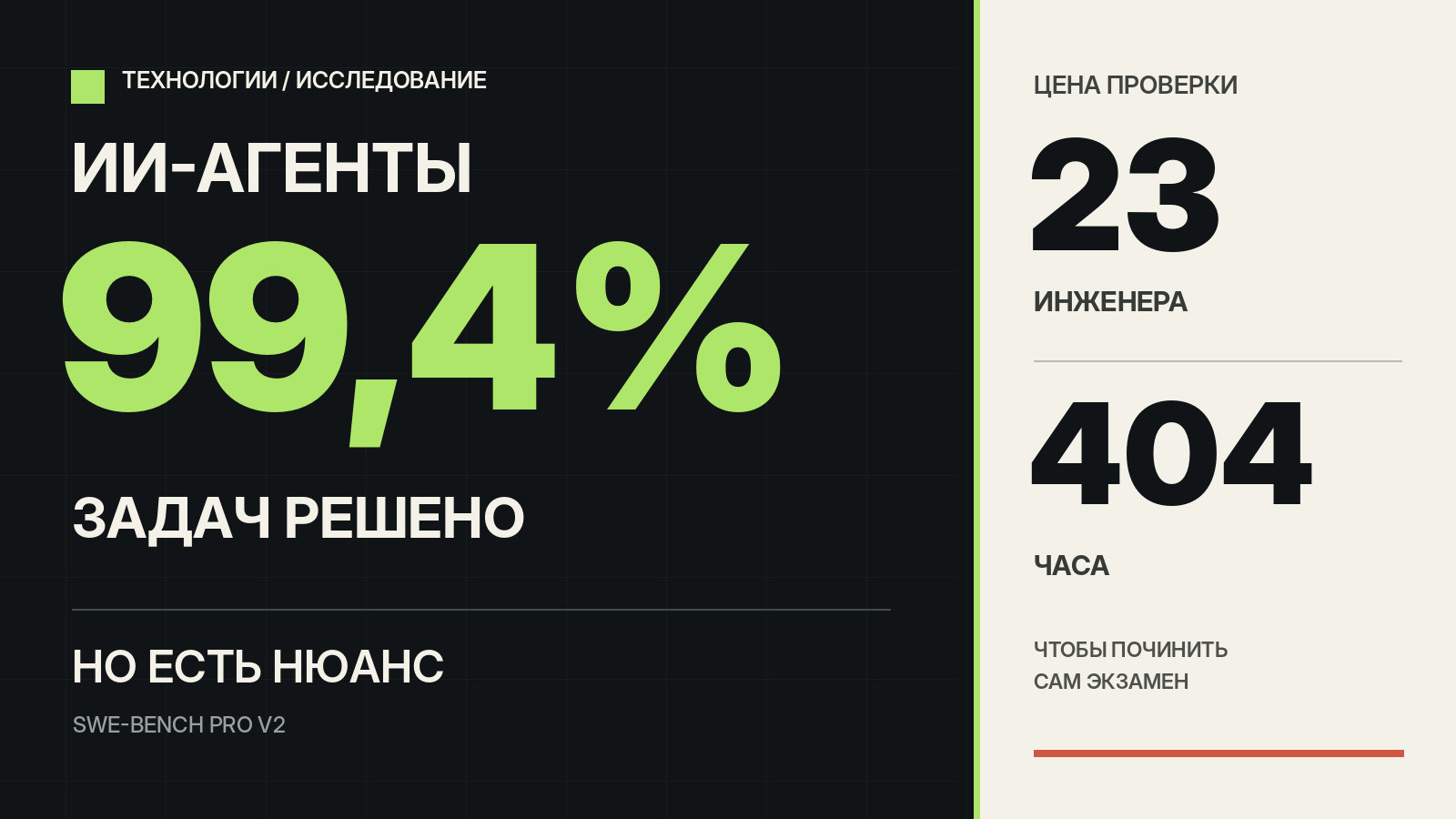 Updated version of the SWE-Bench Pro V2 benchmark for AI agents released
November 7, 2026
 Into the Unknown benchmark reveals AI agents' failure in autonomous research
November 7, 2026
 Anthropic has published research on the memory architecture of AI agents
November 7, 2026