 mozgi
Researchers have proposed a method of scaling computations through multi-agent coordination
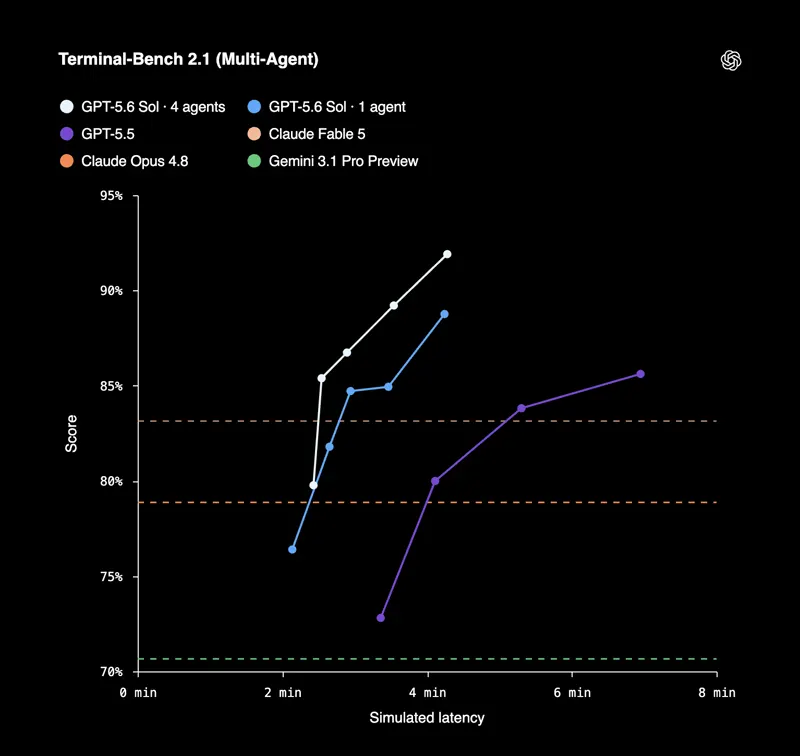
Researchers have published an analysis of multi-agent coordination methods that allow increasing the volume of computational resources at the post-training stage of models. The approach is based on parallelizing tasks and reusing logical chains, which makes it possible to more efficiently distribute the load between several agents.
The main idea is that instead of linearly increasing the model's parameters, you can use parallel processing, where each agent performs part of the calculations. This allows directing more compute resources to verify and verify answers without waiting for the completion of the entire sequence generation by one process. The method makes it possible to reduce the likelihood of errors due to distributed quality control.
The study notes that current architectures are able to scale efficiently when using coordination protocols that minimize redundant calculations. The use of such systems makes it possible to redistribute the token budget, allocating more power to complex stages of reasoning, which is critical for tasks with a high degree of uncertainty.
Despite the potential, experts emphasize that multi-agent methods currently account for less than 10% of recent breakthroughs in LLM performance. Nevertheless, the transition to agent-based systems is becoming a key vector for overcoming the limitations of classical training, where computational efficiency is limited by the architectural limits of one model.
This study opens up new opportunities for optimizing post-training, allowing developers to flexibly manage computational costs. The implementation of such approaches can significantly change the approach to creating specialized systems that require high accuracy with limited infrastructure resources.
Related news
 MaxxBench reveals performance drop in language models
November 7, 2026
 Anthropic researcher evaluates AI effectiveness in auditing agent actions
November 7, 2026
 Updated version of the SWE-Bench Pro V2 benchmark for AI agents released
November 7, 2026
 Into the Unknown benchmark reveals AI agents' failure in autonomous research
November 7, 2026