mozgi
Researchers have introduced a method for recursive self-improvement of The Trinity agents
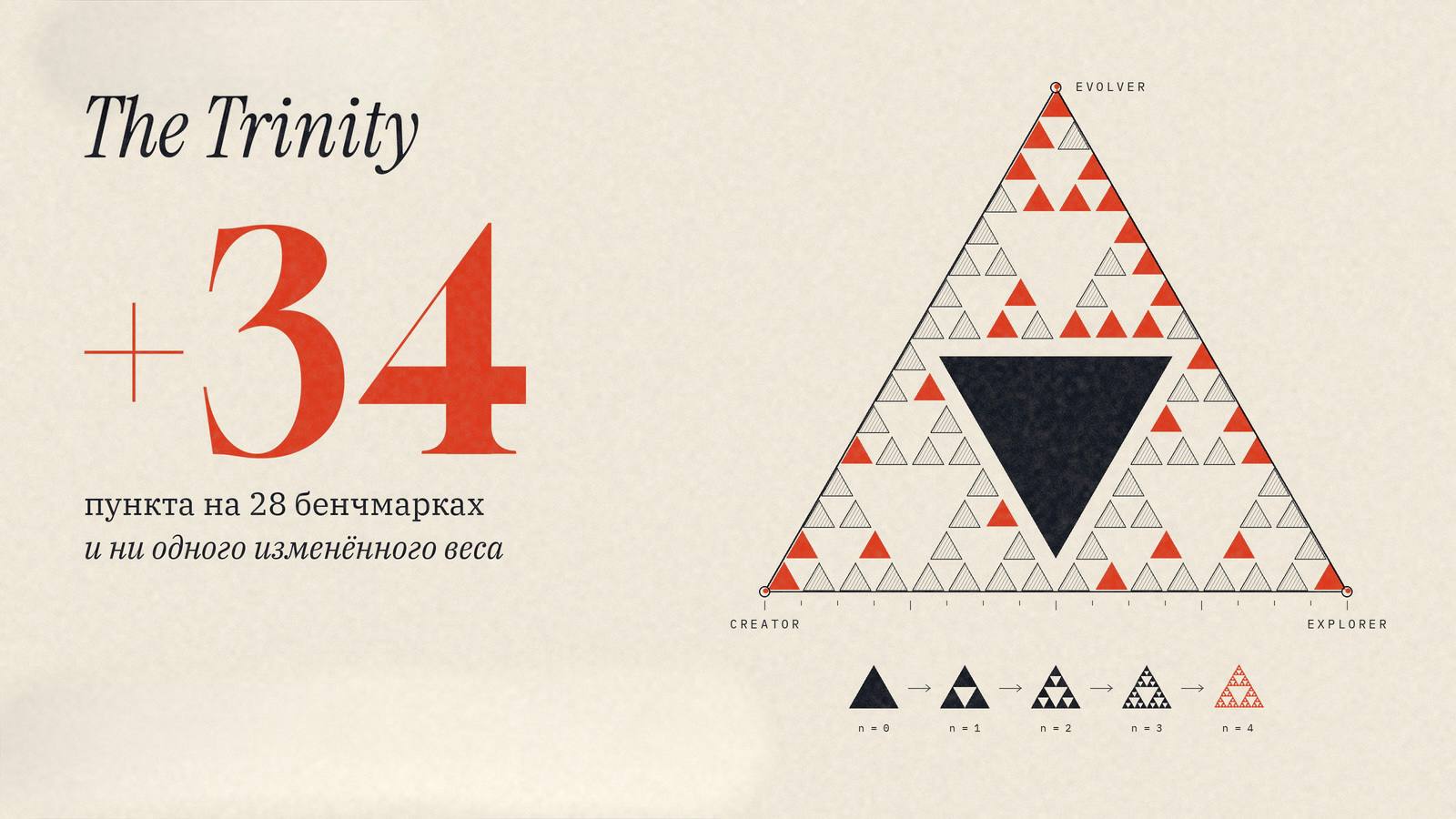
Researchers from the National University of Singapore have presented a paper, The Trinity, describing an approach to the recursive self-improvement of multimodal agents without modifying base weights. The method is based on using a frozen model, with only the control code and environment undergoing optimization.
The paper, published on arXiv, describes a system consisting of three specialized roles, a capability tree, a router, and a simulation mechanism. By modifying the agent's wrapper—the code that defines context, memory, and task completion conditions—the system demonstrates a performance increase across 26 new types of tasks.
The approach allows for the development of artificial intelligence system capabilities without the costs of retraining or fine-tuning the neural network, relying instead on the structural organization of the external control loop. The full text of the research is available on the Habr platform.