mozgi
GPT Image 2.0
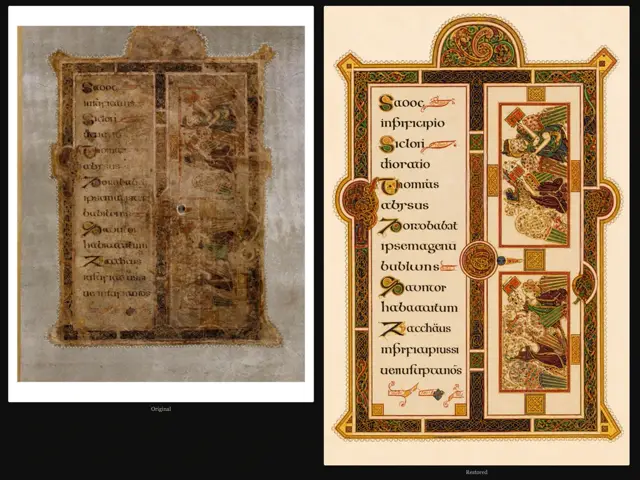
以 GPT Image 2.0 呈現凱爾特古抄本受損頁面與金箔華麗修復版本的並列對照,包含褪色原稿與精緻裝飾
提示詞
目標:建立一張左右並排的比較圖,展示一頁受《凱爾經》啟發的古代彩繪手稿在修復前後的樣貌;修復版本應比受損原稿乾淨、明亮且華麗得多。

畫布:寬幅橫向黑色背景,約為 16:9。將兩個大型直式手稿面板以充足邊距並排放置:左側面板為受損原稿,右側面板為修復後的重建版本。在每個面板下方置中加入小型標籤:左側標籤為 “Original”,右側標籤為 “Restored”。

版面配置:確切使用 2 個主要面板。左側面板佔據左半部,位於白色相片風格邊框內。右側面板佔據右半部,視覺上更大、更清晰銳利,並由淡色羊皮紙頁緣框住。兩個面板都呈現相同的手稿頁面大致構圖:高聳的裝飾邊框、左側文字欄,以及右側插圖欄。

左側面板,受損原稿:展示一頁褪色、風化的手稿,拍攝於灰色調的檔案背景上。羊皮紙呈棕色、帶有污漬、磨損且部分地方半透明,具有撕裂的邊緣、缺失的角落、水漬損壞、變暗的接縫,以及不均勻的變色。設計幾乎難以辨識:左側是一個直式文字區塊,包含深色中世紀書法、褪色的紅色與金色首字母;右側是一欄兩幅幽靈般的微型插圖,幾乎已被完全磨除。裝飾邊框應當可見,但要顯得磨損、骯髒且不完整。在原稿頁面偏右側中央附近加入一個小型深色圓形瑕疵或孔洞。整個左側影像應保持低飽和、低對比且劣化的效果。

右側面板,修復版本:在溫暖的奶油色羊皮紙上,展示一頁鮮明亮麗、經過完整修復的彩繪手稿。頁面採用高度精緻的中世紀凱爾特風格,包含大量金箔,以及紅色、綠色、黑色與橘色裝飾。使用華麗的建築式框架,包含交織結紋、幾何面板、圓形徽章,以及頂部的穹頂拱門。修復效果應呈現理想化且過於完美的樣貌,線條銳利,色彩飽和。

修復頁面元素數量:確切包含 1 個大型外部裝飾手稿框架;頂部確切包含 1 個填滿凱爾特螺旋裝飾的穹頂拱門;框架上確切包含 4 個突出的側邊裝飾,分別位於兩側中點與類似角落的延伸部位;確切包含 1 個左側直式文字欄,其中有 10 行帶裝飾首字母的偽拉丁文安色爾體書法;右側文字欄中確切包含 2 個上下堆疊的矩形敘事微型插圖;確切包含 3 個重疊於中央分隔線與側框上的圓形徽章裝飾;確切包含 4 個小型方形金色裝飾區塊,分別放置在框架的上方附近、中央、下方中央與底部附近。

文字與字樣:手稿文字應類似中世紀島嶼體文字與偽拉丁文,而不是現代易讀的字體。使用綠色、紅色、金色與黑色的裝飾首字母。可使用 “Scooc”、“infiricipio”、“Sicloi”、“thoratio”、“chomias”、“abysus”、“Zorozobat”、“ipsemagenu”、“bubliuns”、“Qauncor”、“habacautum”、“Zacchäus” 和 “uenufurcanos” 作為可見的偽文字,但只要風格相符,文字也可以部分保持無意義。

視覺風格:博物館式比較展示;左側為檔案紀錄風格,右側為理想化的數位修復。強烈對比衰敗與修復。修復頁面應包含明顯的金屬金箔高光、乾淨的羊皮紙、凱爾特結紋、福音書手稿風格,以及精細繁複的中世紀裝飾。

限制:除了兩個小型標籤之外,不要加入額外面板、人物、使用者介面控制項、浮水印或說明性標題。將比較內容平衡且置中地呈現在純黑背景上。
Goal: Create a side-by-side comparison image showing an ancient illuminated manuscript page before and after restoration, inspired by the Book of Kells, with the restored version looking far cleaner, brighter, and more ornate than the damaged original.

Canvas: Wide horizontal black background, approximately 16:9. Place two large vertical manuscript panels side by side with generous margins: the left panel is the damaged original, the right panel is the restored reconstruction. Add a small centered label under each panel: left label “Original”, right label “Restored”.

Layout: Use exactly 2 main panels. The left panel occupies the left half and sits inside a white photo-like border. The right panel occupies the right half and is larger-looking, crisp, and framed by a pale parchment page edge. Both panels show the same general manuscript-page composition: a tall decorative border, a left text column, and a right illustration column.

Left panel, damaged original: Show a faded, weathered manuscript page photographed on a grayish archival background. The parchment is brown, stained, frayed, and translucent in places, with torn edges, missing corners, water damage, darkened seams, and uneven discoloration. The design is barely legible: a vertical text block on the left with dark medieval calligraphy, faded red and gold initials, and a right column with two ghostly miniature illustrations that are almost erased. The ornamental border should be visible but worn, dirty, and incomplete. Include one small dark circular blemish or hole near the center-right of the original page. Keep the whole left image muted, low contrast, and degraded.

Right panel, restored version: Show a vividly restored illuminated manuscript page on warm cream parchment. The page has a highly polished medieval Celtic style with abundant gold leaf, red, green, black, and orange ornament. Use an ornate architectural frame with interlacing knotwork, geometric panels, round medallions, and a domed arch at the top. The restoration should look idealized and too pristine, with sharp lines and saturated colors.

Restored page element count: Include exactly 1 large outer decorated manuscript frame; exactly 1 domed arch at the top filled with Celtic spiral ornament; exactly 4 protruding side ornaments on the frame, one at each side midpoint and corner-like extension; exactly 1 left vertical text column containing 10 lines of pseudo-Latin uncial calligraphy with decorated initials; exactly 2 rectangular narrative miniature illustrations stacked vertically in the right column; exactly 3 circular medallion ornaments overlapping the central divider and side frame; exactly 4 small square gold decorative blocks, placed near the top, center, lower center, and bottom of the frame.

Text and lettering: The manuscript text should resemble medieval Insular script and pseudo-Latin, not modern readable typography. Use decorative initials in green, red, gold, and black. Suggested visible pseudo-text can include “Scooc”, “infiricipio”, “Sicloi”, “thoratio”, “chomias”, “abysus”, “Zorozobat”, “ipsemagenu”, “bubliuns”, “Qauncor”, “habacautum”, “Zacchäus”, and “uenufurcanos”, but it may remain partly nonsensical as long as the style matches.

Visual style: Museum-comparison presentation, archival documentary on the left and idealized digital restoration on the right. High contrast between decay and restoration. The restored page should include obvious metallic gold leaf highlights, clean parchment, Celtic knots, evangelist-manuscript styling, and intricate medieval ornament.

Constraints: Do not add extra panels, people, UI controls, watermarks, or explanatory captions beyond the two small labels. Keep the comparison balanced and centered on a plain black background.
此提示詞的權利屬於作者 @MiMundoConIA。任何商業使用(推廣 AI 工具、聚合平台、Telegram 機器人)由你自行負責,mozgi.io 不承擔任何責任。 詳情 →