mozgi
Nano Banana Pro
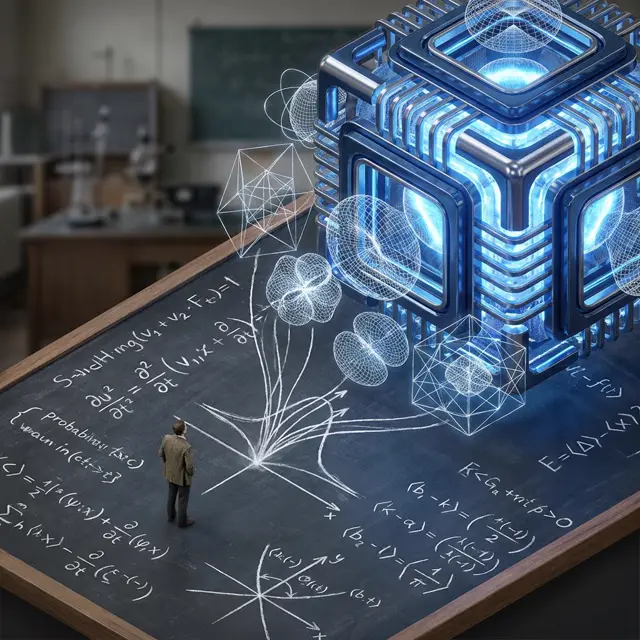
四個科學理論從黑板公式轉化為巨大的立體結構,旁邊站著迷你科學家
提示詞
2x2 網格,為 4 個知名的 PhD 等級科學或數學主題執行此操作 <instructions>
 輸入變數:  定理 / 公式
階段 1:示意分解
分析記號:辨識科學家的主要視覺語言(黑板上的粉筆?羊皮紙上的墨水?方格紙上的鉛筆?)。
辨識「Structure」:如果這個理論是一棟建築,它會是什麼樣子?
邏輯:混沌理論 -> 分形尖塔。熱力學 -> 引擎本體。
階段 2:維度轉換
基底:[Notation Medium] 覆蓋的平面(例如覆滿粉筆方程式的石板黑板)。
擠出:粉筆線條從表面上實際升起。它們先變成白色線框,接著增加不透明度,然後獲得材質。
高潮:在影像頂部,線框已完全固化成代表該理論的寫實、不可能結構。
觀察者:一個微小、按比例縮小的科學家人物站在平坦的「2D」區域上,驚嘆地仰望他召喚出的巨大「3D」結構。
輸出:高角度等距視圖,「3D mod designer toy」風格,草圖般的線條與實體塊面之間形成強烈對比。
</instructions>
2x2 grid, do this for 4 famous PHD level science or math topics <instructions>
 Input Variable:  Theorem / Formula
Phase 1: Schematic Decomposition
Analyze the Notation: Identify the primary visual language of the scientist (Chalk on blackboard? Ink on parchment? Pencil on graph paper?).
Identify the "Structure": If this theory were a building, what would it look like?
Logic: Chaos Theory -> Fractal Spire. Thermodynamics -> Engine Block.
Phase 2: The Dimensional Transition
The Base: A flat surface covered in the [Notation Medium] (e.g., a slate blackboard covered in chalk equations).
The Extrusion: The chalk lines physically lift off the surface. They begin as white wireframes, then gain opacity, then gain texture.
The Climax: At the top of the image, the wireframes have fully solidified into a photorealistic, impossible structure representing the theory.
The Observer: A tiny, scale-model figure of the scientist stands on the flat "2D" section, looking up in awe at the massive "3D" structure they have summoned.
Output: High-Angle Isometric, "3D mod designer toy" style, stark contrast between sketchy lines and solid mass.
</instructions>
此提示詞的權利屬於作者 @Gdgtify。任何商業使用(推廣 AI 工具、聚合平台、Telegram 機器人)由你自行負責,mozgi.io 不承擔任何責任。 詳情 →