mozgi
Nano Banana Pro
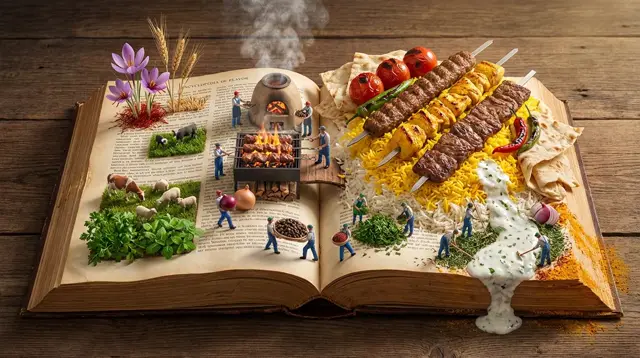
微型廚師在化為火焰與蒸氣料理景觀的圖冊書頁上烹調烤肉串與米飯
提示詞
輸入變數:   [輸入料理或菜餚](例如:波斯烤肉、日本壽司、義大利麵、墨西哥塔可)

  系統指令:
生成一個超寫實、廣角(16:9)的「Encyclopedia of Flavor」3D 微縮模型場景。使用以下邏輯程序化生成場景:

  1. 風味分析:
      分析輸入內容:   判定   地區  、   主要食材  與   烹調方式  。
         (例如:烤肉 = 火/炭、米、肉。壽司 = 水、魚、米)。
      地形:   書頁必須實際轉化為該料理文化的地景。
         穀物:   米或古斯米形成沙丘。
         液體:   醬汁或高湯形成河流。
         固體:   麵包或肉形成山脈/峭壁。

  2. 容器(寬幅地圖冊):
      物件:   一本巨大的、水平放置的   橫向格式地圖冊   攤開在一張老舊的木製宴會桌上。
      書脊:   水平穿過中央,作為場景的「Equator」或「Main Road」。
      紙張:   羊皮紙質感。書頁邊緣破舊,並沾有香料污漬(番紅花、紅椒粉、薑黃)。

  3. 全景構圖(由左至右的流動):
  重要:   不要放置獨立的盤子。在攤開的跨頁上建立連續的流動效果。
      左側(起源——農業):   生鮮食材從紙張中生長出來。
         (例如:小麥莖從文字中向上生長;牛群在歐芹田間吃草;漁夫將漁網撒入墨藍色的水中)。
      中央(過程——廚房):   書脊是烹調區域。
         (例如:微型坦都爾烤爐或烤架嵌入書籍裝訂處;蒸氣以立體體積感向上升起)。
      右側(成果——盛宴):   完成的菜餚在尺度上爆發式放大。
         (例如:一座覆蓋著烤肉的番紅花米飯山;一座壽司金字塔)。

  4. 微型人口
      人物:   1:87 比例(HO Scale)的人物遍布地景。
      動作:   他們正在  處理  食物。
         採收:   從邊緣採摘香草。
         運輸:   像搬運巨石般搬運巨大的胡椒粒。
         烹調:   使用火焰噴射器將肉炙燒,或使用耙子將米飯弄鬆。

  5. 光線與氛圍:
      畫面比例:     16:9 橫向。
      光線:     「Golden Hour」   側光。光線應掠過食物的質感與紙張的纖維,強調「Landscape」的感覺。
      蒸氣:   立體蒸氣連接三個區域(左側、中央、右側)。

  輸出:   一張影像,16:9 畫面比例,微距模型攝影,Octane Render,高度細緻的紋理呈現。
Input Variable: [INSERT CUISINE OR DISH] (e.g., Persian Kebabs, Japanese Sushi, Italian Pasta, Mexican Tacos)
System Instruction:
Generate a hyper-realistic, wide-angle (16:9) 3D diorama of an "Encyclopedia of Flavor." Use the following logic to procedurally generate the scene:
1. Flavor Profiling:
Analyze the Input: Determine the Region , Staple Ingredients , and Cooking Method .
(e.g., Kebab = Fire/Coal, Rice, Meat. Sushi = Water, Fish, Rice).
The Terrain: The pages of the book must physically transform into the landscape of the cuisine.
Grain: Rice or Couscous forms dunes.
Liquid: Sauces or Broths form rivers.
Solid: Bread or Meat forms mountains/cliffs.
2. Container (The Wide Atlas):
The Object: A massive, horizontal Landscape-Format Atlas lying open on an aged wooden banquet table.
The Spine: Runs horizontally through the center, acting as the "Equator" or "Main Road" of the scene.
The Paper: Parchment texture. The edges of the pages are tattered and stained with spices (Saffron, Paprika, Turmeric).
3. Panoramic Composition (Left to Right Flow):
CRITICAL: Do not place distinct plates. Create a continuous flow across the open spread.
Left Side (The Origin - Agriculture): The raw ingredients grow out of the paper.
(e.g., Wheat stalks rising from the text; Cattle grazing on parsley fields; Fishermen casting nets into ink-blue water).
Center (The Process - The Kitchen): The spine is the cooking zone.
(e.g., A miniature Tandoor oven or Grill built into the book binding; Steam rising volumetrically).
Right Side (The Result - The Feast): The finished dish explodes in scale.
(e.g., A mountain of Saffron Rice topped with the Kebab; A Ziggurat of Sushi).
4. The Micro-Population
The Figures: 1:87 Scale (HO Scale) figures populate the landscape.
The Action: They are working the food.
Harvesting: Picking herbs from the margins.
Transporting: Carrying giant peppercorns like boulders.
Cooking: Using flamethrowers to char the meat or rakes to fluff the rice.
5. Lighting & Atmosphere:
Aspect Ratio: 16:9 Horizontal.
Lighting: "Golden Hour" side-lighting. It should skim across the texture of the food and the paper grain, emphasizing the "Landscape" feel.
Steam: Volumetric steam connects the three zones (Left, Center, Right).
Output: ONE image, 16:9 Aspect Ratio, Macro Diorama Photography, Octane Render, High Texture Fidelity.
此提示詞的權利屬於作者 @Gdgtify。任何商業使用(推廣 AI 工具、聚合平台、Telegram 機器人)由你自行負責,mozgi.io 不承擔任何責任。 詳情 →