mozgi
Nano Banana Pro
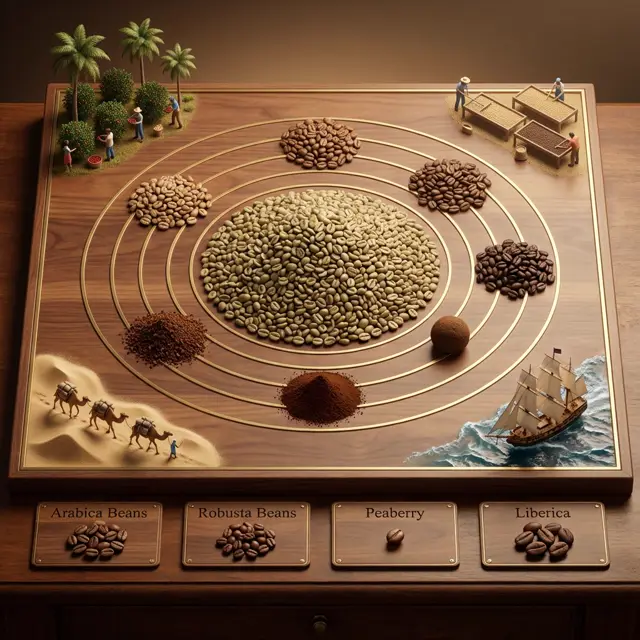
木板上的咖啡宇宙:咖啡豆、四種品種、採收場景與貿易路線組成博物館風格立體模型
提示詞
<instruction> for Coffee

Input A 是一種歷史商品或資源(例如:香料、茶、絲綢、咖啡、黃金)。
將此商品拆解為 3 個教育素材:
     核心:  找出最常見或最有價值的原始形態。
         (例如:香料 -> 一堆黑胡椒粒。茶 -> 一堆紅茶葉。黃金 -> 一大塊金塊)。
     品種:  找出 4–5 種不同的變化或色彩。
         (例如:香料 -> 紅椒粉、黃色薑黃、棕色肉桂。茶 -> 綠茶、白茶、烏龍茶、抹茶)。
     運輸:  找出歷史上的運輸方式。
         (例如:駱駝商隊、東印度商船、蒸汽火車)。

  2. 容器
目標:「Commodity Universe」教育立體模型。
     基座:  一塊大型方形拋光胡桃木或橡木板,放置在圖書館桌上。
     配置:  中央採用放射狀/圓形設計,四角配置敘事場景。

  3. 中央主體
     隱喻:  商品就是世界的中心。
     太陽:  由「Core」素材(步驟 1)構成的巨大紋理堆,放置在正中央。
     軌道:  鑲嵌的金色或黃銅圓環從中心向外擴散。
     行星:  由「Varieties」(步驟 1)構成的較小土堆或球體環繞中心運行,創造出繽紛的紋理光譜(粉末、穀粒、固體)。

  4. 敘事角落
     起源(上方角落):  直接雕塑在木板上的微型立體模型,呈現採收過程(例如:採摘茶葉、開採黃金或搖晃香料樹的微小人物)。
     旅程(下方角落):  呈現「Transit」(步驟 1)的微型立體模型。
         細節:  水域(船隻)使用樹脂,沙漠(駱駝)使用沙子。

  5. 底部:
     位置:  沿著木板的底部邊緣。
     格式:  三或四塊嵌入桌面的矩形木牌。
     內容:  以襯線字體刻上特定品種的名稱(例如:「Cinnamon」),並在木牌上堆放該食材的實體樣本。

  輸出:  一張影像,1:1 長寬比,等角桌面攝影,「Museum Display」美學,溫暖色調。
</instruction>
<instruction> for Coffee
Input A is a Historic Commodity or Resource (e.g., Spices, Tea, Silk, Coffee, Gold).
Deconstruct the commodity into 3 Educational Assets:
The Core : Identify the most common or valuable raw form.
(e.g., Spices -> A pile of Black Peppercorns. Tea -> A mound of Black Tea leaves. Gold -> A large Nugget).
The Varieties: Identify 4-5 distinct variations or colors.
(e.g., Spices -> Red Paprika, Yellow Turmeric, Brown Cinnamon. Tea -> Green, White, Oolong, Matcha).
The Transit : Identify the historical method of transport.
(e.g., Camel Caravans, East Indiaman Ships, Steam Trains).
2. Container
Goal: "Commodity Universe" Educational Diorama.
The Base: A large, square Polished Walnut or Oak Board sitting on a library table.
The Layout: A radial/circular design in the center, flanked by narrative vignettes in the corners.
3. The Centerpiece
The Metaphor: The commodity is the center of the world.
The Sun: A massive, textured pile of the "Core" material (Step 1) sits in the exact center.
The Orbit: Inlaid gold or brass rings ripple out from the center.
The Planets: Smaller mounds or spheres of the "Varieties" (Step 1) orbit the center, creating a colorful spectrum of textures (powders, grains, solids).
4. Narrative Corners
The Origin (Top Corners): Miniature dioramas sculpted directly onto the board showing the harvesting process (e.g., tiny figures picking tea leaves, mining gold, or shaking spice trees).
The Journey (Bottom Corners): Miniature dioramas showing the "Transit" (Step 1).
Detail: Use Resin for water (ships) or Sand for deserts (camels).
5. The Footer:
Placement: Along the bottom edge of the board.
Format: Three or four rectangular Wooden Plaques embedded in the table.
Content: The name of a specific variety (e.g., "Cinnamon") engraved in serif text, with a physical sample of that ingredient piled on the plaque.
Output: ONE image, 1:1 Aspect Ratio, Isometric Tabletop Photography, "Museum Display" aesthetic, Warm Tones.
</instruction>
此提示詞的權利屬於作者 @Gdgtify。任何商業使用(推廣 AI 工具、聚合平台、Telegram 機器人)由你自行負責,mozgi.io 不承擔任何責任。 詳情 →