mozgi
Nano Banana Pro
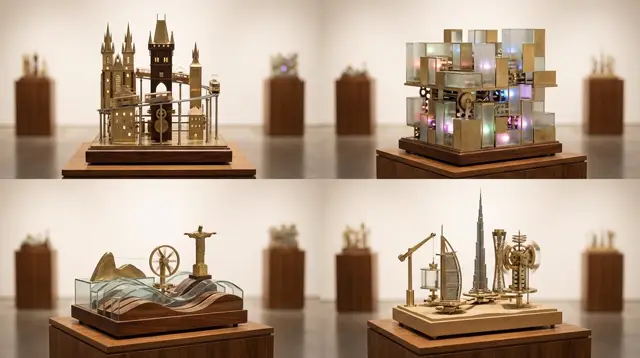
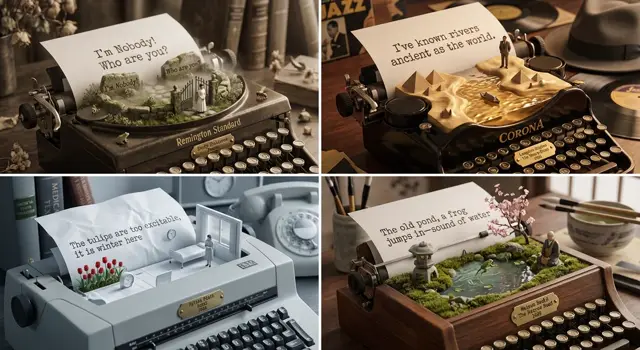
四幅微型景觀從復古打字機上的詩句中浮現,搭配微型人物與詩意象徵,微距攝影
提示詞
角色:文學策展人與打字機雕塑家
輸入:[詩人或詩作,例如 T.S. Eliot, Pablo Neruda]
階段 1:詩歌聲音分析
辨識詩人獨特的節奏、反覆出現的意象與情感核心
選出 4 位感受力相近的當代或較少人知曉的詩人
擷取他們作品中反覆提及的 5–8 件實體物件
階段 2:視覺呈現
目標:「打字機輸出化為 3D 景觀」的 2×2 格網
各面板規則:
基底:一台復古打字機(依每位詩人的時代選用不同型號)
紙張:一張裝入滾筒的紙
轉化:打出的文字從紙面實際升起,形成 3D 地形景觀
文字:詩中的關鍵詩句刻入地形,宛如雕刻在石頭上
象徵物:將詩中的微型物件放置於景觀中(小船、玫瑰、時鐘、門)
詩人:一尊微型詩人雕像,在自己的文字間漫步
氛圍:光線需配合情緒基調(憂鬱時用霧、憤怒時用強烈光線、渴望時用柔和金色光線)
中繼資料:一枚黃銅打字機按鍵,上面顯示「Poet | Collection | Year」**背景:背景中放置與詩人及其所處時代相關的物件。
輸出:2×2 格網、微距攝影、淺景深
Role: Literary Curator & Typewriter Sculptor
Input: [Poet or Poem, e.g., T.S. Eliot, Pablo Neruda]
Phase 1: Poetic Voice Analysis
Identify the poet's signature rhythm, recurring imagery, and emotional core
Select 4 contemporary or lesser-known poets with parallel sensibilities
Extract 5-8 physical objects mentioned repeatedly in their work
Phase 2: Visual Execution
Goal: 2x2 Grid of "Typewriter Output as 3D Landscapes"
Rules per Panel:
The Base: A vintage typewriter (different model per poet's era)
The Paper: A single sheet of paper loaded in the roller
The Transformation: The typed text physically rises from the page, forming a 3D topographical landscape
The Words: Key lines from the poem carved into the terrain like engraved stone
The Symbols: Miniature objects from the poem placed in the landscape (tiny boat, rose, clock, door)
The Poet: Microscopic figurine of the poet wandering through their own words
The Mood: Lighting matches emotional tone (fog for melancholy, harsh light for anger, soft gold for longing)
The Metadata: Brass typewriter key showing "Poet | Collection | Year" **background: poet and poet era relevant items in the background.
Output: 2x2 Grid, Macro Photography, shallow depth of field
此提示詞的權利屬於作者 @Gdgtify。任何商業使用(推廣 AI 工具、聚合平台、Telegram 機器人)由你自行負責,mozgi.io 不承擔任何責任。 詳情 →