 mozgi
Researchers presented the Clipper algorithm for verification of neural systems
September 16, 2026
Researchers have introduced a new method for verifying nonlinear neural network feedback systems, addressing the scalability issue in analyzing autonomous applications. The work, published in a preprint on arXiv, proposes an approach combining branch and bound methods with constraint propagation. As part of the research, two key components were developed: the Rail interface and the Clipper algorithm. The Rail system provides integration of polyhedral shells of dynamics with boundary propagation methods in the style of LiRPA. In turn, Clipper performs joint refinement of these shells and separation of controller activations, allowing for efficient processing of complex computational graphs. The main advantage of the proposed framework is the preservation of symbolic correlations between time steps, which was previously unavailable for combinatorial solvers. The authors note that current methods either fail to handle the size of neural networks or lose accuracy when using propagative algorithms. The new method enables verification of systems that were previously considered too complex for analysis. Test results show that the proposed architecture demonstrates significant superiority over existing solutions in nonlinear dynamics verification tasks. Using this method allows engineers to more accurately assess the behavior of neural network controllers in critical autonomous systems, minimizing the risk of errors when scaling models.
Related news
 Anthropic summarizes seven months of Project Glasswing
November 10, 2026
 Researchers have introduced a method for recursive self-improvement of The Trinity agents
November 10, 2026
 Google DeepMind has introduced AlphaProof Code for software verification
November 10, 2026
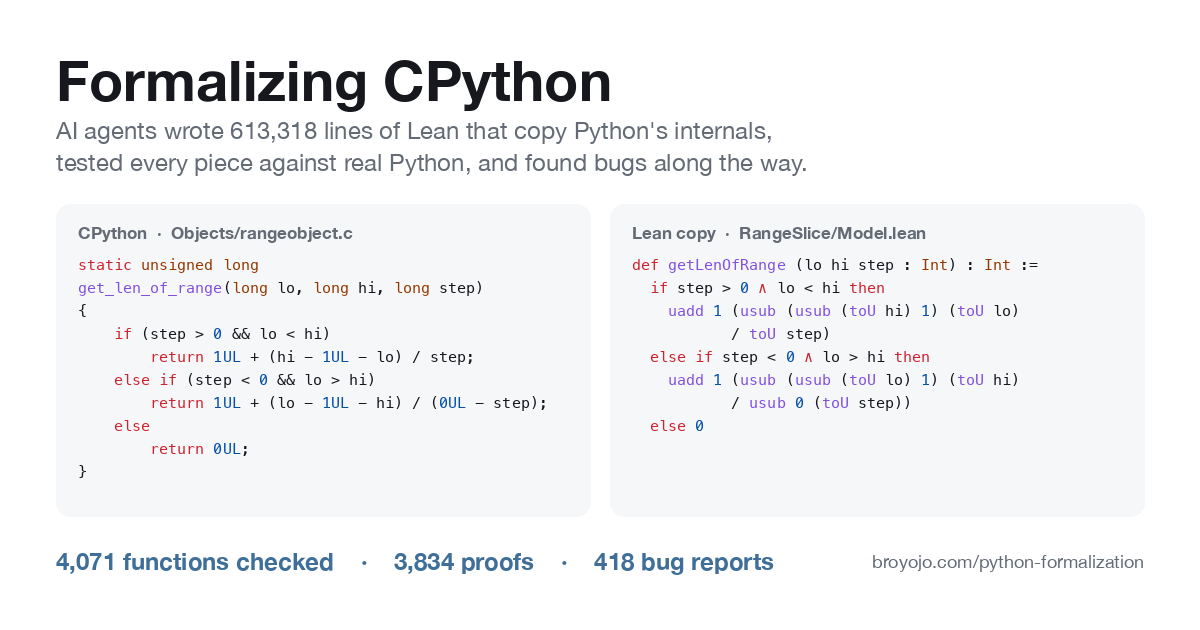 AI agents rewrote CPython code in Lean to find bugs
November 10, 2026